In today’s digital landscape, your online reputation directly impacts how customers perceive your business, and whether they choose you or a competitor. With over 90% of consumers checking reviews before making a decision, even small changes in ratings or search visibility can have a measurable impact on revenue.
Because of this, more businesses are asking two key questions:
- How much does online reputation management cost?
- How can we control or reduce those costs over time?
This guide breaks down both.
Why Online Reputation Management Matters

Online reputation is no longer just about perception, it directly affects performance across your entire marketing funnel. Read more.
Recent data shows:
- Over 90% of consumers check online reviews before engaging with a business
- A one star increase in rating can lead to a 5–9% increase in revenue
- Negative search results on page one can reduce conversions by up to 30%
Customers often form an opinion about your business before ever visiting your website. Reviews, ratings, and search results act as your first impression, and in many cases, your most important one. This is why reputation management has shifted from a reactive service to a proactive growth strategy.
How Online Reputation Management Pricing Works
Online reputation management pricing varies widely across the industry because no two businesses start in the same position.
Most ORM services fall into three general pricing structures:
| Pricing Model | How It Works |
|---|---|
| Monthly Retainer | Ongoing monitoring, review management, and strategy execution |
| Project Based | One time clean up or reputation repair initiatives |
| Performance Based | Pricing tied to specific outcomes or results |
In most cases, businesses benefit from a monthly approach. Your reputation is constantly evolving across platforms like Google, social media, and third party directories, which means ongoing management is required to maintain and improve it.
What Impacts Reputation Management Costs
The cost of ORM services is driven primarily by complexity rather than just service type. One of the most important factors is your current reputation. Studies show that over 85–90% of consumers read multiple reviews before making a decision, meaning businesses with limited or negative feedback often require significantly more effort to build trust. A business with minimal reviews will require a different strategy than one dealing with negative press or poor ratings.
Business size also plays a role. A single location business typically requires less effort than a multi location or national brand, where reputation must be managed across multiple regions and platforms. Additionally, the scope of services has expanded significantly. Reputation management now includes review generation, search result management, content development, and ongoing monitoring, all of which influence cost.
Why Reputation Management Costs Can Spiral
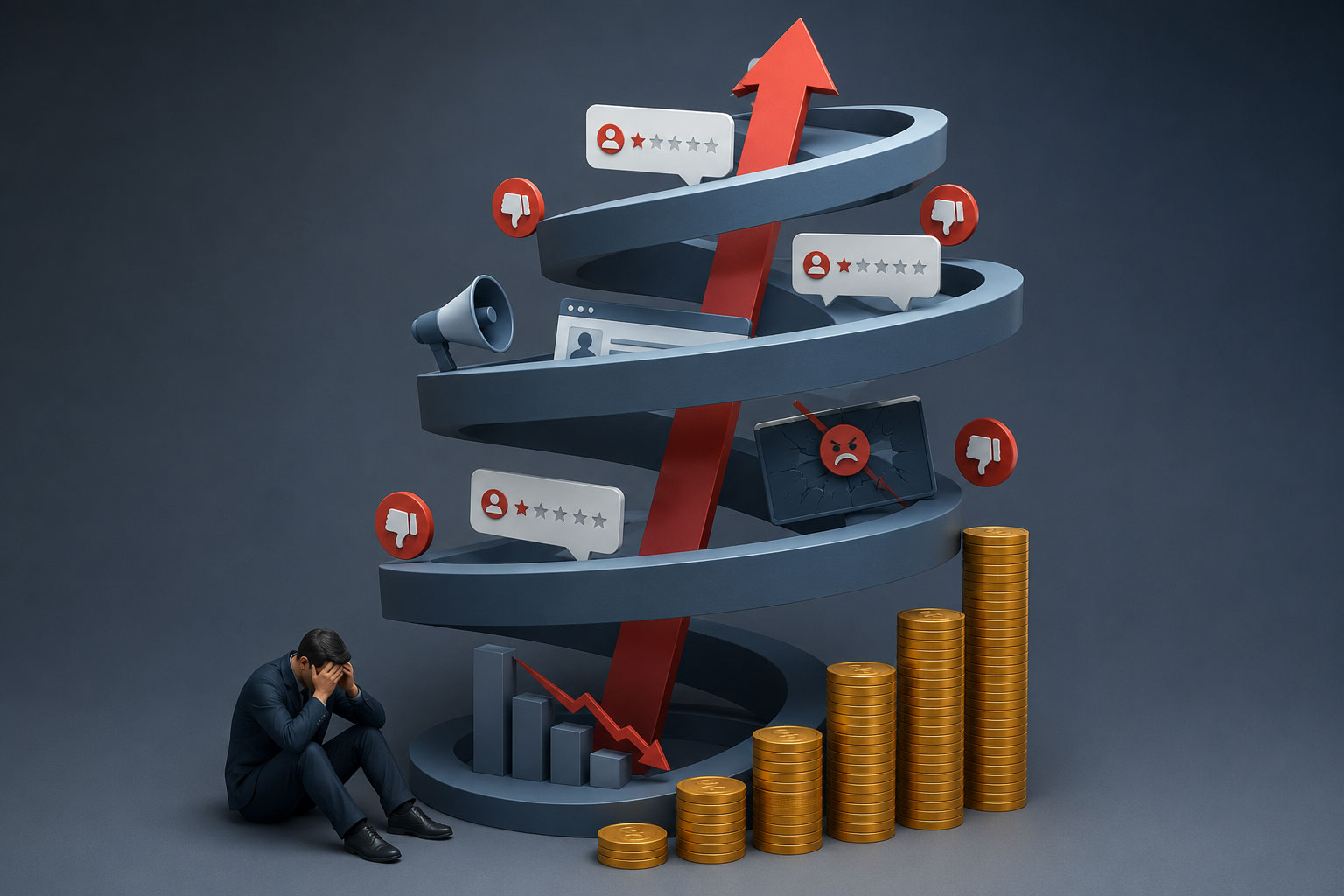
One of the biggest challenges businesses face is not just investing in reputation management, but controlling costs over time. Costs tend to increase when businesses take a reactive approach. Many only invest in ORM after negative reviews or search results begin affecting performance. At that point, the level of effort required is significantly higher than if reputation had been managed consistently from the beginning.
Delayed action often leads to:
- Increased visibility of negative content
- More complex recovery strategies
- Higher long term investment
Another common issue is fragmented efforts. Managing reviews, social media, and search presence separately can lead to inefficiencies and duplicated work. The most cost effective approach is to treat reputation management as an ongoing system rather than a one time fix.
What Does Online Reputation Management Cost?
One of the most common questions businesses ask is how much they should expect to invest in reputation management.
While there is no universal answer, industry benchmarks can help set expectations.
| Service Level | Typical Investment Range | Use Case |
|---|---|---|
| Basic Monitoring & Review Management | Lower monthly investment range | Small/local businesses |
| Growth ORM Strategy | Mid range investment | Businesses actively building reputation |
| Advanced Reputation Repair | Higher investment range | Businesses dealing with negative visibility |
| Enterprise ORM | Significant ongoing investment | Multi location or national brands |
From an industry perspective, many businesses allocate a portion of their overall marketing budget toward reputation management. This often falls in the range of 10–20% of total marketing spend, depending on the importance of reviews and search visibility in their industry. For businesses in highly competitive or review driven markets, that percentage may be even higher.
Rather than focusing solely on cost, it is more effective to evaluate reputation management based on its impact on lead generation, conversion rates, and overall growth.
The ROI of Reputation Management
The return on investment for ORM is often underestimated because it impacts multiple areas of your business simultaneously.
A strong reputation improves:
- Conversion rates across your website
- Performance of paid advertising campaigns
- Trust and credibility in competitive markets
Businesses with consistent positive reviews and strong search visibility typically see higher engagement and lower cost per lead. Over time, this creates a compounding effect. As your reputation improves, your reliance on paid acquisition may decrease, while organic visibility becomes a stronger driver of growth.
For example, consider a local service business generating 1,000 website visitors per month. If their reputation improves from a 3.5-star rating to a 4.5-star rating, it’s not uncommon to see conversion rates increase from around 3% to 5% or higher. That shift alone can result in dozens of additional leads each month without increasing traffic or ad spend.
At the same time, stronger reviews and higher trust signals can improve ad performance, often lowering cost per click and increasing click through rates. Over time, this means the business is not only generating more leads, but doing so more efficiently, reducing overall customer acquisition costs.
How to Keep Online Reputation Management Costs Under Control
The return on investment for ORM is often underestimated because it impacts multiple areas of your business simultaneously.
A strong reputation improves:
- Conversion rates across your website
- Performance of paid advertising campaigns
- Trust and credibility in competitive markets
Businesses with consistent positive reviews and strong search visibility typically see higher engagement and lower cost per lead. Over time, this creates a compounding effect. As your reputation improves, your reliance on paid acquisition may decrease, while organic visibility becomes a stronger driver of growth.
For example, consider a local service business generating 1,000 website visitors per month. If their reputation improves from a 3.5-star rating to a 4.5-star rating, it’s not uncommon to see conversion rates increase from around 3% to 5% or higher. That shift alone can result in dozens of additional leads each month without increasing traffic or ad spend.
At the same time, stronger reviews and higher trust signals can improve ad performance, often lowering cost per click and increasing click through rates. Over time, this means the business is not only generating more leads, but doing so more efficiently, reducing overall customer acquisition costs.
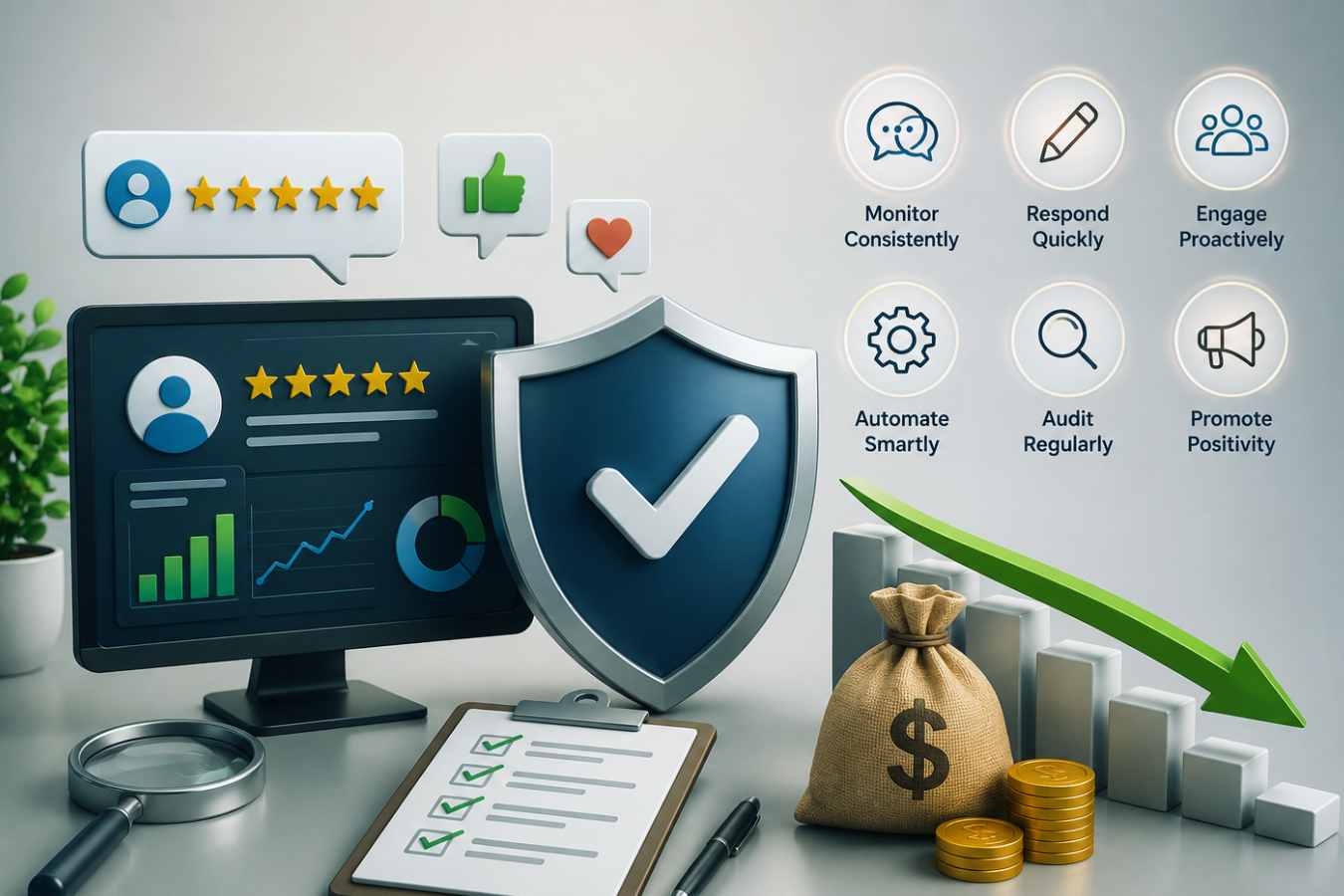
Controlling ORM costs is less about spending less and more about spending efficiently.
The most effective way to reduce costs is to minimize the need for reactive work.
Build a Strong Review Foundation
Consistently generating positive reviews strengthens your overall rating and reduces the impact of occasional negative feedback. Businesses that actively request reviews tend to maintain higher ratings and stronger visibility in search results.
Respond Early, Not Reactively
Timely responses to reviews and comments can prevent small issues from escalating. A fast, professional response often reduces long term damage and improves customer perception.
Centralize Your Reputation Efforts
Managing reviews, social media, and search presence under one strategy reduces inefficiencies and ensures consistent messaging across platforms.
Use Automation Strategically
Automation tools can streamline monitoring and review requests, reducing time and operational costs. However, human oversight remains critical for handling sensitive interactions.
Monitor Search Results Consistently
Search results play a major role in reputation. Regular monitoring allows you to identify potential issues early and address them before they grow into larger problems.
Conduct Regular Reputation Audits
A structured audit helps identify gaps, risks, and opportunities for improvement. This allows businesses to prioritize efforts and avoid unnecessary spending.
Cost Over Time: Reactive vs Proactive Approach
The way you approach reputation management has a direct impact on long term cost.
| Approach | Short Term Cost | Long Term Impact |
|---|---|---|
| Reactive | Lower initially | Higher over time due to recurring issues |
| Proactive | Moderate | Lower long term cost and stable reputation |
| Strategic | Higher initial investment | Best long term ROI and efficiency |
Businesses that invest early and consistently typically spend less overall and achieve more predictable results.
The Hidden Cost of Ignoring Reputation
While many businesses focus on the cost of ORM services, the bigger risk is the cost of inaction.
A poor reputation can lead to:
- Lower conversion rates
- Reduced trust among potential customers
- Missed opportunities from high intent leads
In many cases, these losses outweigh the cost of maintaining a strong reputation.
Final Takeaway
Online reputation management is not just an expense, it is a growth lever.
Businesses that manage their reputation proactively tend to:
- Convert more leads
- Build stronger trust
- Reduce long term marketing costs
Those that ignore it often face higher costs later, both financially and in lost opportunities.
Ready to Take Control of Your Online Reputation?
At Canopy Media, we approach reputation management as part of a broader growth strategy. The goal is not just to manage reviews, but to improve how your business is perceived, discovered, and chosen online.
Get Your Free Reputation Audit
We’ll review how your business appears across search and review platforms, identify risks, and outline clear opportunities to improve performance.