Toronto is one of the most competitive dental markets in Canada.
Patients have more choice than ever. A person searching for a dentist in Toronto can compare clinics in the downtown core, Scarborough, North York, Etobicoke, Mississauga, Vaughan, and the wider GTA within minutes. They can read reviews, check photos, compare services, browse websites, and decide whether a clinic feels trustworthy before calling the front desk.
That is why dental SEO in Toronto is no longer just about ranking for “dentist near me.” It is about building visibility, trust, and appointment intent across the full patient journey.
A strong dental SEO strategy helps your practice show up when people are actively searching for care. That includes routine cleanings, emergency dental appointments, Invisalign, implants, cosmetic dentistry, family dentistry, wisdom tooth removal, teeth whitening, and other high value services.
For Toronto dental practices, SEO matters because every missed search can become a booked patient for another clinic.
Why Dental SEO Is Different From Regular SEO
Dental SEO sits in a unique category because patients are not only comparing price or convenience. They are also judging trust.
A patient looking for a new dentist may be anxious, in pain, new to the city, unhappy with a previous clinic, or researching a procedure they do not fully understand. This makes dental content different from ordinary service business content. It needs to be clear, reassuring, accurate, and easy to act on.
Google also treats healthcare content carefully because it can affect people’s wellbeing. Dental websites need strong expertise signals, clean service pages, trustworthy provider information, helpful FAQs, accurate claims, strong reviews, and a good mobile experience.
This means a dental clinic cannot rely on thin service pages and generic blog posts. A strong website should answer real patient questions and clearly guide people toward booking.
Toronto Dental Search Behaviour Is Local
Toronto search behaviour is not one single pattern.
Someone searching “emergency dentist downtown Toronto” usually has a different need than someone searching “family dentist Scarborough” or “Invisalign North York.” Patients often search by neighbourhood because convenience matters. They want a clinic close to home, work, school, transit, or parking. This is why a strong dental SEO Toronto strategy should include neighbourhood relevance.
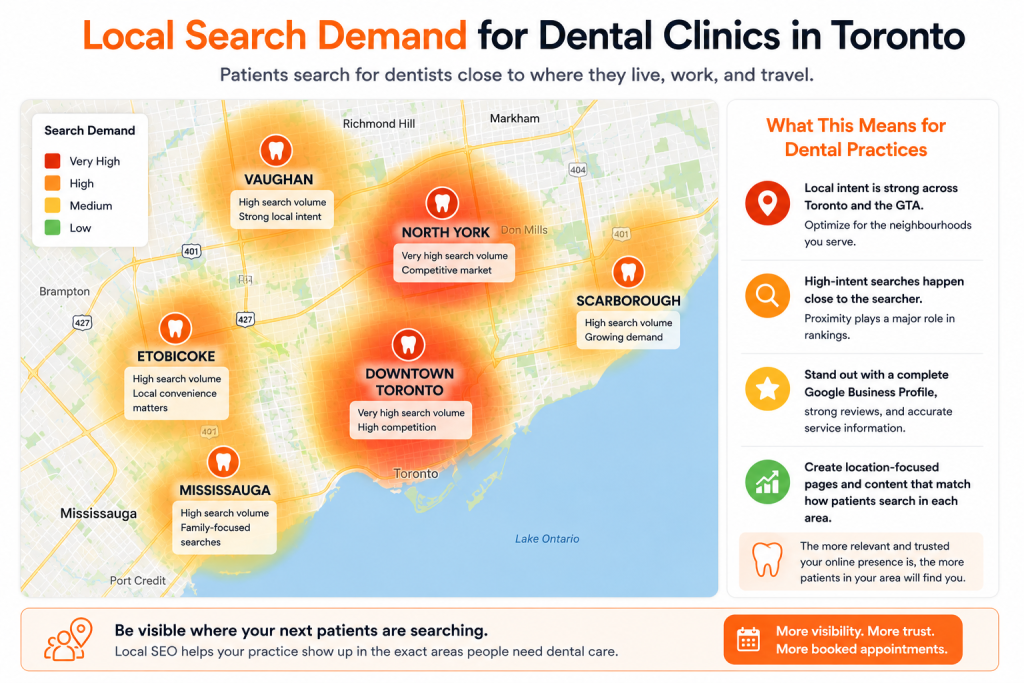
Your website and Google Business Profile should clearly reflect the areas you serve, the treatments you provide, and the reasons patients should trust your clinic. Local SEO data supports this. Google says local results are based mainly on relevance, distance, and prominence. For dental practices, that means your visibility depends on how well your online presence matches the search, how close you are to the searcher, and how trusted your clinic appears online.
Google Business Profile Is Often the First Impression
For many dental searches, patients may see your Google Business Profile before they ever reach your website.
That profile can influence whether they call, visit your site, read reviews, or move to a competitor. Photos, services, business categories, hours, appointment links, Q&A, and review responses all shape trust.
For dental clinics, Google Business Profile should not be treated as a one time setup task. It should be maintained like a front door to the practice.

A strong profile should clearly show your services, recent photos, accurate contact details, updated hours, and a steady flow of reviews. Reviews are especially important because patients often use them as a shortcut for trust. Dental marketing sources consistently highlight that visible ratings and recent reviews can influence both local search performance and patient choice.
The Dental SEO Funnel
Dental SEO works best when it supports every stage of patient decision making.
| Patient Stage | Example Search | Best Content Type |
|---|---|---|
| Urgent need | emergency dentist Toronto | Emergency service page |
| Research | dental implants cost Toronto | Educational guide |
| Comparison | Invisalign vs braces Toronto | Comparison blog |
| Local decision | dentist near me open Saturday | Google Business Profile and local page |
| Trust check | best dentist Toronto reviews | Reviews and testimonial content |
This matters because not every patient is ready to book immediately. Some are comparing procedures. Some are checking insurance information. Some are looking for pricing context. Others are ready to call right now.
The strongest dental websites support all of these moments.
What a Strong Dental SEO Strategy Should Include
The foundation should begin with core service pages. Every important treatment should have its own page with clear explanations, patient focused language, FAQs, internal links, and a strong call to action.
A page about dental implants should not simply say the clinic offers implants. It should explain who may be a candidate, what the process generally involves, what patients usually want to know before booking a consultation, and why the clinic is qualified to help.
The same applies to Invisalign, emergency dentistry, cosmetic dentistry, family dentistry, teeth whitening, wisdom teeth removal, and other major services.
Content should then support those pages. Blog posts can answer questions patients already ask at the front desk, such as how to handle a dental emergency, how often to book cleanings, what to expect during Invisalign treatment, or how to compare whitening options.
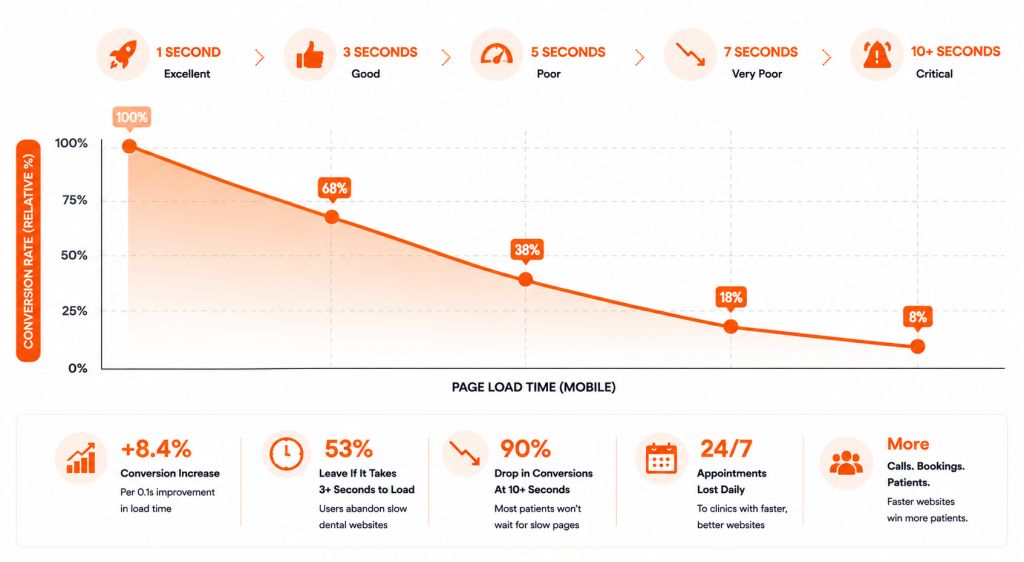
Technical SEO also matters. A slow site, confusing mobile layout, broken links, duplicate content, or weak page structure can reduce performance. Since many patients search from phones, mobile experience directly affects whether search visibility becomes a booked appointment.
Reviews and Reputation Are Part of SEO
Dental SEO and reputation management are closely connected.
A clinic with strong rankings but weak reviews may still lose patients. A clinic with excellent reviews but poor visibility may not be discovered often enough.
The best performing practices usually build both together.
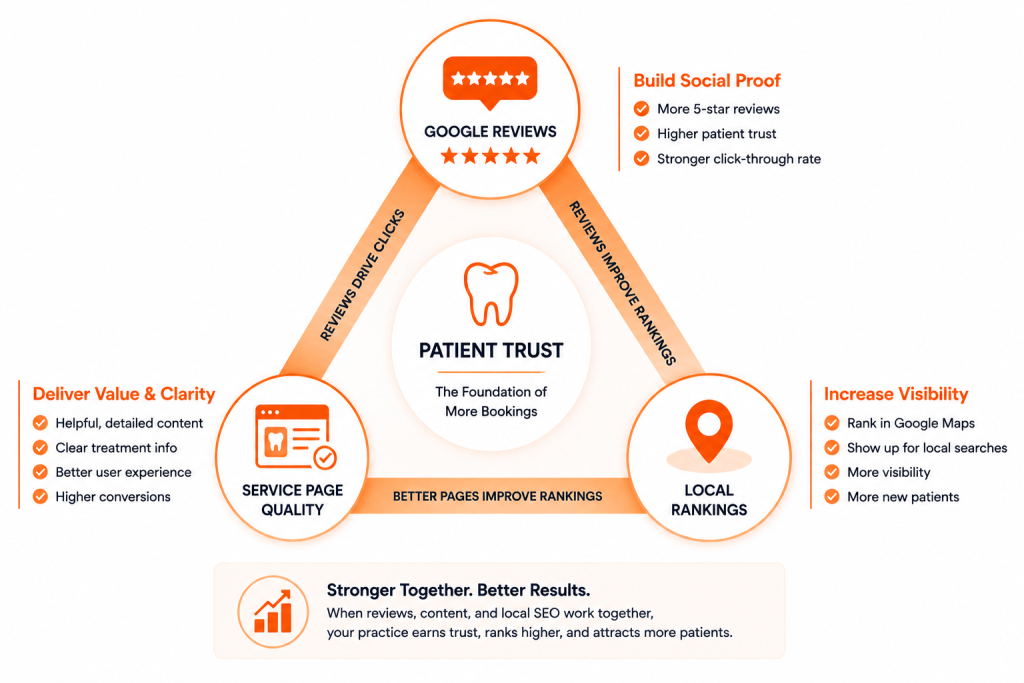
That means requesting reviews consistently, responding professionally, using patient feedback to improve service pages, and making trust signals visible throughout the website.
Patient trust, content quality, and local visibility work together. Strong reviews support better conversion, strong service pages support better rankings, and local SEO helps patients discover the practice at the right moment.
A Practical First 90 Days for Dental SEO
The first month should focus on access, audit, and cleanup. This includes reviewing Search Console, analytics, Google Business Profile, page rankings, technical issues, reviews, and top service pages.
The second month should focus on implementation. This may include improving priority service pages, updating metadata, fixing technical blockers, strengthening internal links, and cleaning up Google Business Profile details.
The third month should focus on content and measurement. At this stage, the practice can publish patient focused content, review early ranking movements, monitor calls and forms, and refine the plan based on what is actually generating appointment opportunities. Read more: Ultimate Guide to SEO for Dentists Your Dental Practice
The goal is not random content production. The goal is building a measurable patient acquisition system.
Final Thoughts
Dental SEO in Toronto is not about chasing rankings for the sake of visibility.
It is about helping the right patients find your clinic, trust your team, understand your services, and take the next step toward booking.
In a city as competitive as Toronto, the practices that win organic search are usually the ones that combine strong local SEO, patient focused content, technical performance, reviews, and clear conversion paths.
Patients are already searching. The real question is whether they find your dental practice first.
Ready to Grow Your Dental Practice With SEO?
Canopy Media helps dental and healthcare practices improve local visibility, strengthen trust, and generate more qualified patient inquiries through SEO strategies built for modern search.