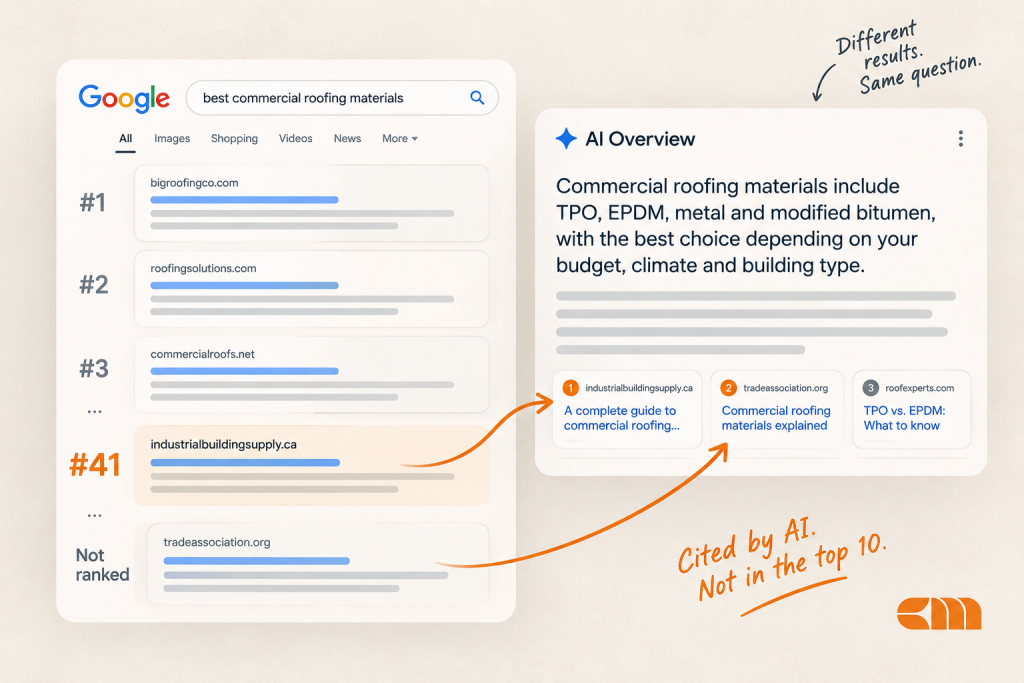
Toronto is one of the most competitive legal markets in Canada.
Whether someone needs a family lawyer, real estate lawyer, employment lawyer, criminal defence lawyer, personal injury lawyer, immigration lawyer, or estate litigation lawyer, the search often begins online. Even when a potential client receives a referral, they will usually Google the lawyer or firm before reaching out.
That means your law firm website is no longer just a digital brochure. It is often the first trust check a potential client makes before deciding whether to call, book a consultation, or move on to another firm.
This is why SEO for lawyers in Toronto has become a serious business development channel. Strong legal SEO helps law firms appear when people are actively searching for legal help, but more importantly, it helps convert that visibility into qualified inquiries.
For law firms, the goal is not simply more traffic. The goal is more of the right matters.
| Source | Lead Quality | Cost Efficiency | Long Term Value |
|---|---|---|---|
| SEO | High | Strong | Compounding |
| PPC | Moderate | Expensive | Temporary |
| Directories | Variable | Moderate | Limited |
| Social Media | Low Intent | Inconsistent | Weak |
Why Legal SEO Is Different From Regular SEO
Legal SEO is different because legal decisions are high trust decisions.
A person searching for a lawyer may be going through divorce, a criminal charge, a workplace dispute, a real estate closing, an injury claim, or an estate conflict. They are not casually browsing. They are often stressed, cautious, and comparing firms carefully.
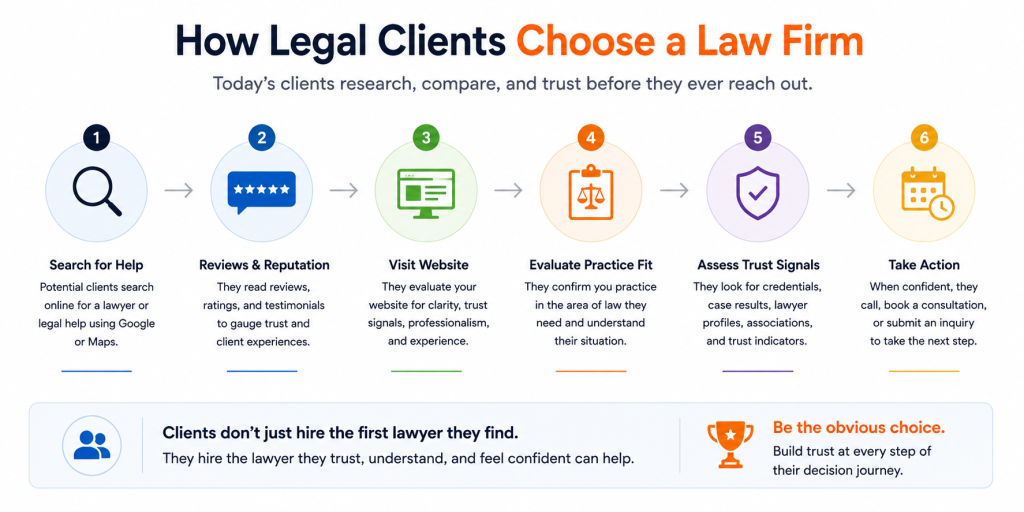
This changes how SEO needs to work.
A law firm website must do more than include keywords. It needs to demonstrate credibility, explain services clearly, answer common client questions, and make it easy for someone to take the next step.
Google also evaluates legal content carefully because it can influence important life and financial decisions. That means legal pages need to show expertise, experience, authority, and trust. Thin content, vague service pages, outdated websites, and generic legal blogs are unlikely to perform well in a competitive Toronto market.
Why Toronto Law Firms Need Local SEO
Toronto is not one single legal search market.
Someone searching for a family lawyer in downtown Toronto may behave differently from someone searching for an employment lawyer in North York, a real estate lawyer in Scarborough, or an immigration lawyer near Etobicoke. Some people search by practice area. Others search by location. Many search by problem.
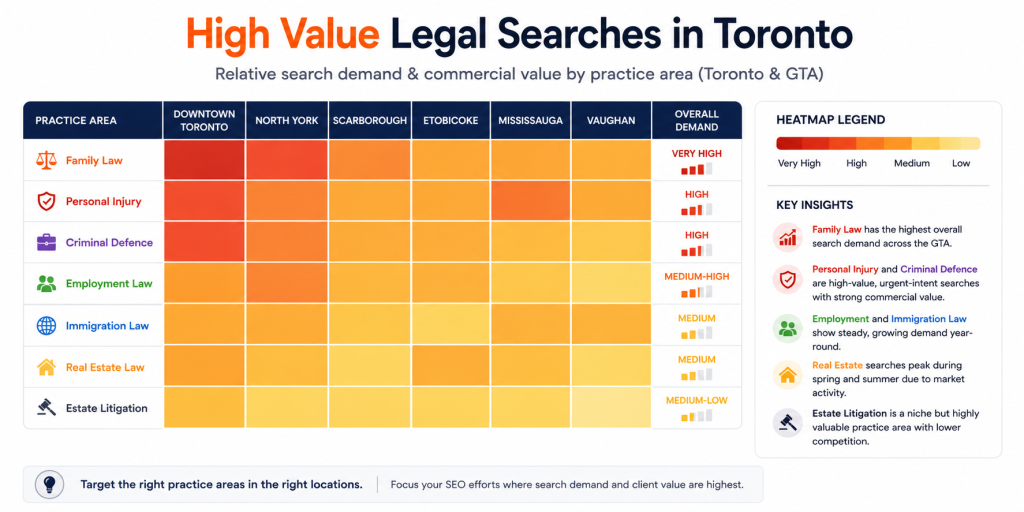
This is why local SEO matters so much for law firms.
Google’s Canadian search market is still heavily dominated by Google, with StatCounter showing Google holding approximately 85.98 percent of search engine market share in Canada in April 2026. For law firms, this means Google visibility remains one of the most important online discovery channels.
A strong Toronto legal SEO strategy should include local service pages, optimized Google Business Profile information, consistent listings, strong reviews, and content that reflects real client concerns.
The Difference Between Legal Keywords and Client Language
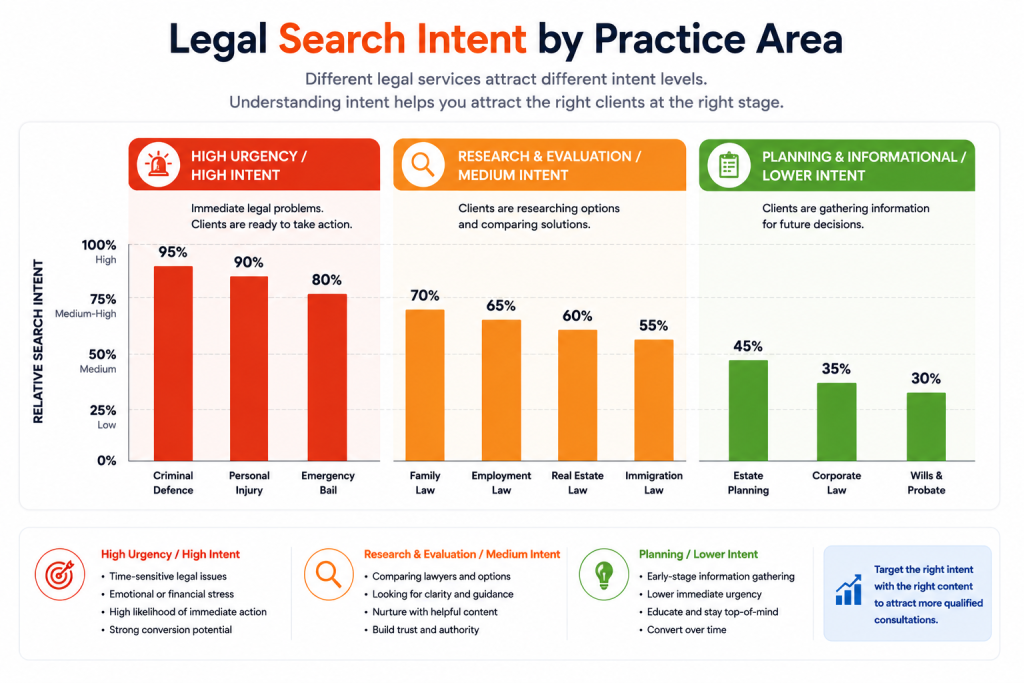
One of the biggest mistakes law firms make is writing only in lawyer language.
Lawyers may use technically accurate terms, while potential clients use plain language. For example, a lawyer may describe a service as “parenting time and decision making responsibility,” while a client may still search “child custody lawyer Toronto.” A firm may use “wrongful dismissal,” while a potential client may search “fired without cause Ontario.”
Good legal SEO bridges that gap.
The website should remain accurate and professional while still reflecting how people actually search. This does not mean oversimplifying the law. It means making the content understandable, searchable, and useful.
A strong keyword strategy should include practice area terms, location terms, problem based searches, and question based searches. For example, a family law firm may target divorce lawyer Toronto, separation agreement lawyer Toronto, spousal support lawyer Ontario, and what happens if my ex refuses parenting time.
Cornerstone Pages Matter More Than Random Blogs
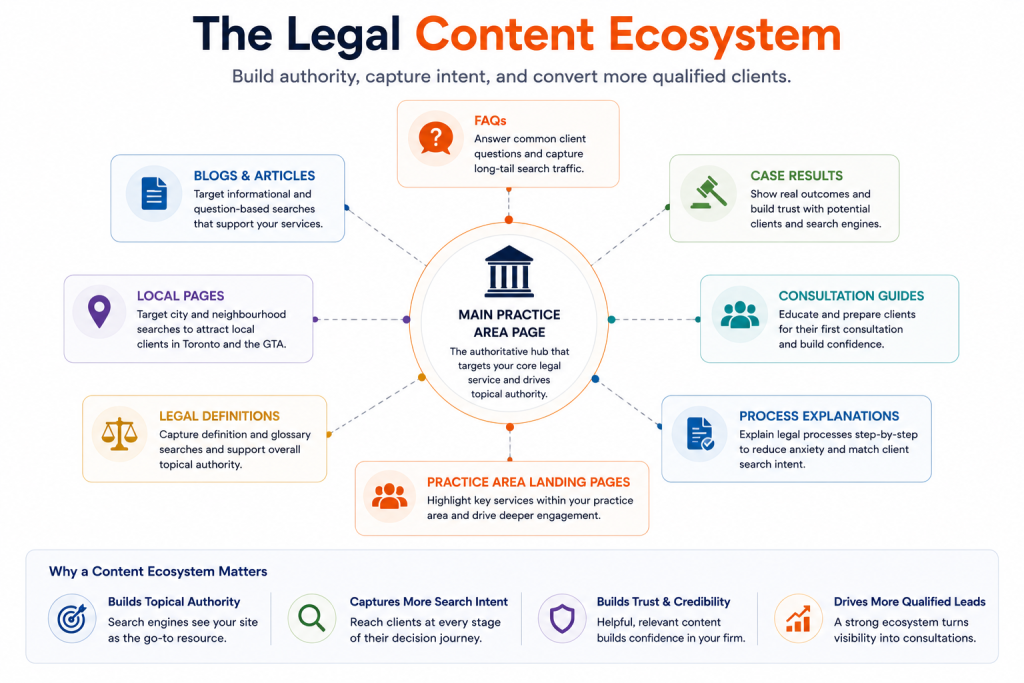
Many law firms publish blogs without a strategy.
They write about legal updates, court decisions, or general topics, but the content does not connect to the services they want to grow. The result is a blog that may be informative but does not support rankings or client acquisition.
A better strategy is to build cornerstone practice pages first.
A cornerstone page is a strong, detailed service page that targets an important legal service. For example, a family law firm may have a detailed divorce lawyer Toronto page, child support page, parenting arrangements page, and separation agreement page. These pages should explain the issue, who the service is for, what clients should know, and how the firm can help.
Blogs should then support those cornerstone pages. A blog about how spousal support is calculated should link to the main spousal support service page. A blog about what to bring to a first consultation should support the main family law page.
This creates a stronger content system instead of isolated articles.
What a Strong Law Firm Website Needs to Convert

Ranking is only part of the equation. If a potential client lands on your website and feels confused, overwhelmed, or unsure, they may leave without contacting you. That is why legal SEO needs conversion strategy.
A strong law firm website should make the next step obvious. It should clearly explain practice areas, show lawyer profiles, include trust signals, answer common questions, and make contact options easy to find.
For many Toronto law firms, the highest performing pages are not always the homepage. Individual practice pages often attract the most qualified traffic because they match specific intent. Someone searching “estate litigation lawyer Toronto” is likely further along than someone searching “law firm Toronto.”
Legal SEO, website design, and conversion strategy work best together. Search brings the visitor in, trust signals reduce hesitation, and clear calls to action turn interest into consultation requests.
Reviews and Reputation Influence Legal Search
Reviews are increasingly important in legal marketing.
Potential clients often read reviews before deciding whether to call a law firm. This is especially true for consumer facing practice areas like family law, immigration, employment, criminal defence, personal injury, and real estate.
Recent legal marketing data shows how important online validation has become. Attorney at Work reported that 86.7 percent of surveyed participants said they would use Google to research a lawyer in 2025. CallRail also reported that online review sites, Google search, referrals, and law firm websites all play major roles in how legal consumers evaluate lawyers.
This means SEO for lawyers is no longer separate from reputation management. Rankings can get attention, but reviews help build confidence.
A Practical First 90 Days of Legal SEO
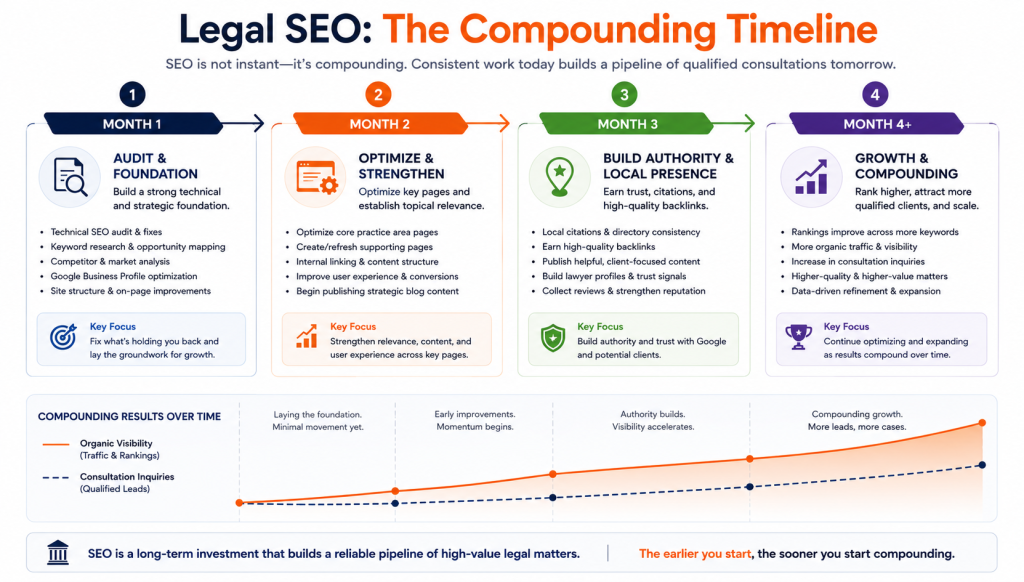
The first month should focus on understanding where the firm stands. This includes reviewing Google Search Console, analytics, existing rankings, Google Business Profile, website structure, technical issues, content gaps, and top practice areas.
The second month should focus on improving the highest value pages. This may include rewriting practice pages, improving titles and metadata, adding FAQs, improving internal links, optimizing calls to action, and fixing technical blockers.
The third month should focus on expanding authority. This may include publishing supporting blogs, improving local signals, requesting reviews, refreshing underperforming pages, and reviewing which queries are actually generating qualified traffic.
The goal is not to produce content for the sake of activity. The goal is to build a measurable pipeline from search visibility to consultation inquiries.
Final Thoughts
SEO for lawyers in Toronto is not about chasing rankings blindly.
It is about helping the right clients find the right legal services at the right moment. The strongest law firm SEO strategies combine local search, client focused language, strong practice pages, useful legal content, technical performance, reviews, and conversion focused website design.
Toronto’s legal market is competitive, but that also means the opportunity is significant. Law firms that invest in search visibility and client trust can build a long term source of qualified inquiries.
Potential clients are already searching.
The question is whether they find your firm first.
Ready to Grow Your Law Firm With SEO?
Canopy Media helps law firms improve search visibility, strengthen website performance, and generate more qualified consultation inquiries through SEO strategies built for competitive legal markets.