OpenAI has officially entered the advertising space with the launch of its new self serve ChatGPT Ads Manager. The move signals one of the biggest shifts in digital advertising since the rise of Google Ads and Meta Ads, and marketers are scrambling to understand how ChatGPT advertising will impact search behavior, PPC strategies, conversion tracking, and online visibility.
The launch comes as ChatGPT continues to dominate the generative AI landscape, with OpenAI previously revealing that hundreds of millions of people use ChatGPT weekly. As conversational AI increasingly becomes part of how users research products, compare services, and make purchasing decisions, advertisers now have an entirely new channel to compete in.
In OpenAI’s official announcement, advertisers in the United States can now access a beta self serve Ads Manager that allows businesses to create campaigns, upload creative, manage budgets, set bids, track conversions, and monitor campaign performance directly inside the platform.
For marketers, agencies, and businesses investing heavily in PPC management, this is not just another ad platform launch. It may represent the beginning of AI-native advertising.
What Is the New ChatGPT Ads Manager?
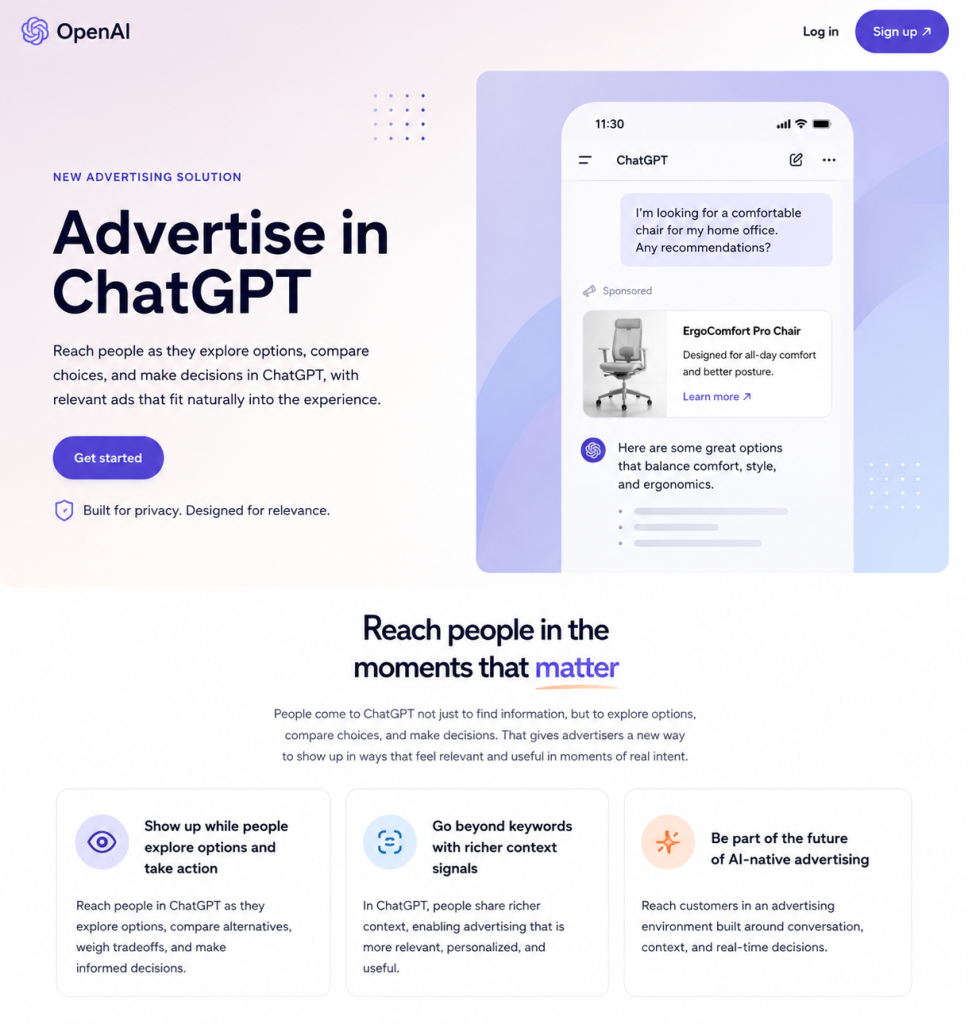
The new ChatGPT Ads Manager is OpenAI’s self serve advertising platform that allows businesses to purchase ads directly within ChatGPT conversations.
Unlike traditional display advertising, ChatGPT ads are designed around conversational intent. OpenAI says the platform focuses on relevance and usefulness while keeping advertisements visually separated from AI-generated answers.
The platform currently supports:
| Feature | ChatGPT Ads Manager |
|---|---|
| Self-serve campaign creation | Yes |
| CPC bidding | Yes |
| CPM bidding | Yes |
| Conversion tracking | Yes |
| Pixel measurement | Yes |
| Conversions API | Yes |
| Agency integrations | Yes |
| Advertiser account portal | Yes |
One of the most notable changes is the addition of CPC bidding. During the pilot phase, advertisers could only purchase inventory on a CPM basis. Now, advertisers can optimize around clicks and engagement, much closer to the structure businesses already use within Google Ads and Meta Ads.
Why This Matters for Search Marketing
The rise of AI-powered search experiences is already changing how users discover information online.
Instead of typing fragmented keywords into search engines, users are increasingly asking conversational questions such as:
- “What’s the best CRM for small construction companies?”
- “Which PPC agency is best for commercial contractors?”
- “What’s the difference between Google Ads and ChatGPT ads?”
This behavior creates an entirely different discovery environment.
Traditional SEO has largely focused on ranking webpages in search engines. AI platforms like ChatGPT shift the focus toward conversational visibility and recommendation positioning. That means businesses may soon need to optimize not only for Google rankings, but also for AI recommendation systems and conversational advertising opportunities.
The Biggest Difference Between Google Ads and ChatGPT Ads
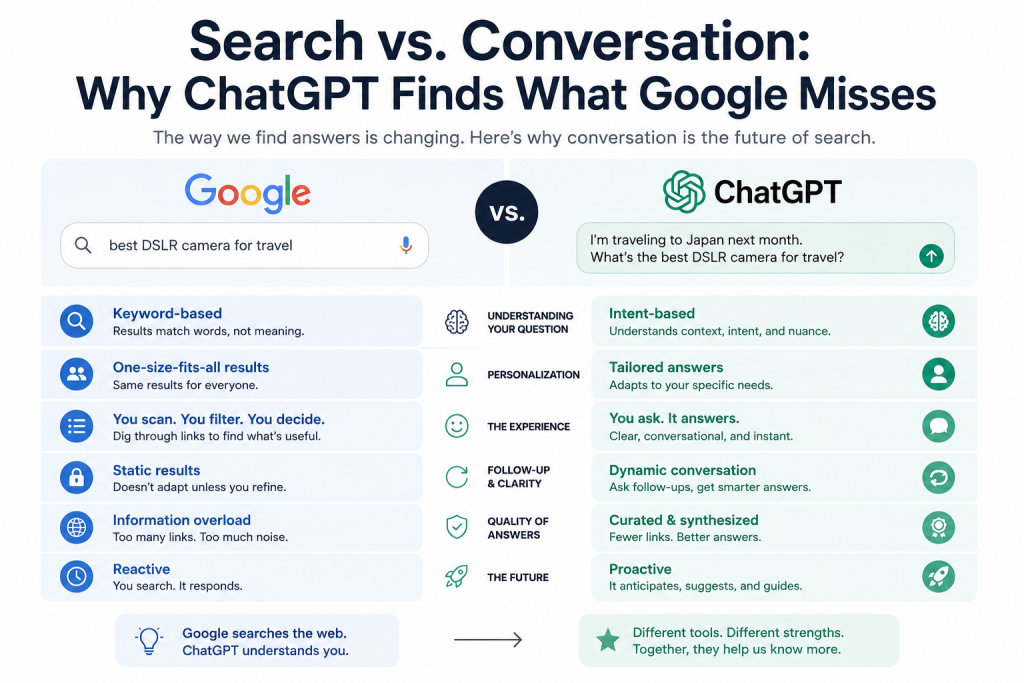
Google Ads is built around search intent tied to keywords.
ChatGPT advertising is built around conversational context.
That distinction is critical.
On Google, users often know what they want. They search specific keywords like “best building materials supplier Miami” or “best PPC agency near me.”
Inside ChatGPT, users are frequently earlier in the buying journey. They are researching, comparing, learning, and asking nuanced questions.
This creates a more consultative advertising environment. OpenAI specifically highlighted that many ChatGPT conversations are active and decision oriented, where users are evaluating categories and exploring solutions before making a decision.
For advertisers, this could eventually create higher quality traffic and stronger conversion intent, especially for high consideration purchases and B2B services.
Privacy and Ad Transparency Will Be a Major Focus
One of the biggest concerns surrounding AI advertising has been privacy.
OpenAI has repeatedly emphasized that advertisers do not have access to individual conversations, memories, or personal chat history. Instead, advertisers receive aggregated performance reporting similar to what advertisers receive on many modern platforms today.
Ads are also clearly labeled as sponsored content and separated from ChatGPT’s responses. This distinction matters because user trust is likely to determine whether AI advertising becomes sustainable long term.
What Keywords Are Trending Around ChatGPT Ads?
Based on current search patterns and industry reporting, businesses looking to rank for this topic should pay close attention to emerging AI advertising keywords.
Some high potential SEO targets include:
| Emerging SEO Keywords | Search Intent |
|---|---|
| ChatGPT Ads Manager | Informational |
| OpenAI advertising platform | Informational |
| ChatGPT PPC advertising | Commercial |
| AI advertising platform | Informational |
| ChatGPT ads beta | News / Informational |
| Conversational advertising | Informational |
| AI search advertising | Informational |
| ChatGPT CPC bidding | Informational |
| OpenAI Ads Manager | Navigational |
| Advertising in ChatGPT | Commercial |
These search terms are likely to grow significantly over the coming months as marketers, agencies, and businesses try to understand the platform.
The Future of PPC Is Becoming AI-Native

This launch also signals something much larger happening within digital marketing.
Advertising is shifting from traditional search results toward AI-assisted discovery and recommendation systems.
Google is investing heavily in AI-powered search experiences. Microsoft continues integrating AI deeper into Bing and Copilot. OpenAI is building an advertising ecosystem directly inside ChatGPT conversations.
The future of paid media may no longer revolve around who ranks first on a search engine results page. It may revolve around which brands become part of AI-generated recommendations and conversational journeys.
That fundamentally changes how businesses think about SEO, PPC management, attribution, conversion optimization, and customer acquisition.
The businesses that adapt early will likely have a major advantage as conversational AI adoption accelerates.
What Should Businesses Do About ChatGPT Ads?
For businesses, the launch of ChatGPT Ads Manager should be viewed as an early opportunity rather than an immediate replacement for Google Ads or traditional digital marketing channels.
The biggest priority right now is preparation.
Businesses should start adapting their marketing strategies for conversational discovery, where users ask detailed questions, compare options, and expect personalized recommendations instead of simply clicking through traditional search results.
That means companies should focus on creating stronger educational content, improving website authority, and building landing pages that answer real customer questions clearly and naturally. AI platforms are far more context-driven than traditional search engines, which means thin content and overly aggressive sales messaging are less likely to perform well over time.
At the same time, businesses should continue investing in strong PPC fundamentals. Accurate conversion tracking, CRM integrations, first-party data collection, and high-performing landing pages will become even more important as AI advertising platforms evolve.
Rather than shifting entire advertising budgets immediately, the smarter approach is to begin testing AI advertising early while competition and costs are still relatively low. Businesses that experiment now will likely gain valuable performance data and strategic advantages before wider adoption drives up costs.
Most importantly, businesses should understand that AI-driven discovery is not just another marketing trend. Consumer behavior is already changing, and conversational platforms like ChatGPT are becoming part of how people research products, services, and purchasing decisions.
The companies that adapt early to conversational marketing, AI search visibility, and emerging advertising platforms will likely be in a much stronger position over the next few years as digital advertising continues shifting toward AI-native experiences.
Final Thoughts
OpenAI’s launch of the ChatGPT Ads Manager marks a turning point for the advertising industry. While the platform is still in beta and early benchmarks remain limited, the direction is becoming increasingly clear: conversational AI is evolving into a major advertising channel.
Businesses that start experimenting early with ChatGPT advertising, AI search optimization, and conversational marketing strategies will likely be better positioned as AI-powered discovery becomes more mainstream.
If your business is looking to stay ahead of evolving PPC trends, AI advertising, and modern search behavior, Canopy Media’s PPC management team can help. From Google Ads and Meta campaigns to emerging AI advertising platforms, we help businesses build scalable strategies designed for where digital marketing is heading next.