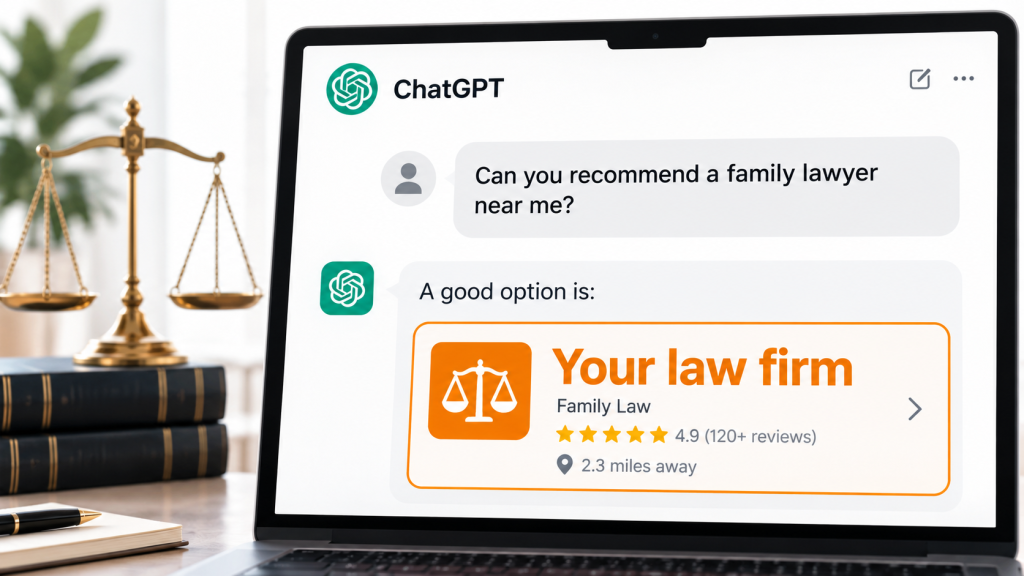
For over twenty years, SEO meant optimizing for search engines, primarily Google. Rank higher, earn backlinks, capture traffic. The formula was relatively stable.
But AI systems like ChatGPT, Gemini, and Google AI Overviews have quietly changed the mechanics of discovery.
Users are no longer scrolling through ten blue links. They are receiving synthesized answers. And when an AI generates the answer, it decides which brands exist and are linked inside that response.
That shift demands more than traditional SEO. It demands Search Anywhere Optimization (SAO).
What Is Search Anywhere Optimization?
Search Anywhere Optimization is the evolution of SEO for an AI-mediated world. Instead of optimizing solely for rankings, SAO optimizes for recognition and recommendation across platforms where discovery happens. Customers now search inside AI assistants, marketplace platforms, social feeds, voice devices, and Google’s AI summaries. Visibility is no longer confined to Google search results.
Traditional SEO asks, “How do we rank?”
SAO asks, “How do we get referenced wherever answers are generated?”
That is a fundamental difference.
Why Traditional SEO Is Losing Control of Visibility
Search engines once acted as directories. They indexed content and presented it for users to evaluate. The user clicked, compared, and decided.
AI platforms compress that process to answer a user’s questions, not tell them where to find the answers. In that model, ranking first does not guarantee inclusion. An AI overview may cite three brands regardless of who holds the top organic position. A conversational assistant may list competitors without mentioning you at all.
This is the rise of what many call zero-click visibility. But it is more than that. It is the rise of AI-mediated brand selection. If your brand is not recognized as an entity within a category, it does not appear inside the answer, no matter how well optimized your landing page is.
From Keywords to Entities
One of the most overlooked shifts is the move from keyword indexing to entity recognition. Traditional SEO focused on keyword targeting. Pages were optimized around phrases, density, and search intent clusters. AI systems operate differently. They understand entities, distinct concepts connected by relationships. Google introduced the Knowledge Graph in 2012 and now contains over 500 billion facts about 5 billion entities. Brands, people, products, and categories are mapped semantically.
When an AI system evaluates a question like “What are the best AI marketing platforms?”, it does not search for exact keyword matches. It predicts which brands are statistically associated with that category across trusted sources.
That prediction is influenced by:
- How consistently your brand is described
- How often it appears in authoritative contexts
- Whether your category positioning is clear
- The structure and clarity of your content
Search Anywhere Optimization recognizes that entity clarity now outweighs keyword frequency.

How AI Systems Decide Which Brands to Reference
AI assistants generate answers by synthesizing patterns learned across vast public data. They favor signals that indicate authority and clarity.
Brands are more likely to appear when they are frequently referenced across reputable domains, clearly defined within their category, and described consistently over time. Structured content, particularly FAQ-style explanations and well-organized headings, increases machine readability, which improves recognition.
This changes the strategic objective.
Instead of obsessing over position one, marketing leaders must ask:
Are we recognizable enough to be predicted as a top entity in our category?
That is the SAO mindset.
The Impact of Google AI Overviews

Google’s AI-generated summaries represent one of the clearest signals that SEO is evolving. These overviews synthesize multiple sources into a single explanation, often reducing the visibility of traditional organic listings. Only cited brands benefit.
The competitive battleground is shifting from ranking positions to citation probability. Being included in an AI-generated summary may carry more influence than holding the top blue link beneath it.
Search Anywhere Optimization prepares brands for this environment by increasing the likelihood of inclusion across AI-generated answers.
AI Is Compressing the Buyer Journey

AI is not just changing search results, it is collapsing the marketing funnel itself. Traditionally, discovery moved from awareness to comparison to evaluation before a user clicked through to a website. Now, a user asks a question and receives a synthesized recommendation inside a single interface, often clicking only one cited brand. The consideration layer is being compressed or removed entirely. The speed of this behavioral shift is unprecedented. ChatGPT reached 100 million users in just two months, making it the fastest growing consumer application in history at the time, far outpacing platforms like TikTok and Instagram. This is not a gradual evolution of search, it is a rapid redistribution of how discovery happens, and when comparison occurs inside AI, visibility becomes about probability of recommendation, not ranking position.
What Search Anywhere Optimization Looks Like in Practice
SAO does not abandon SEO. It expands it.
First, category clarity becomes non-negotiable. Your website must explicitly define what you are, who you serve, and how you differentiate. Ambiguity weakens entity recognition.
Second, content must answer questions directly. AI systems favor structured explanations, concise definitions, and logical formatting. Long, unfocused pages dilute signal strength.
Third, brand mentions beyond your own domain matter significantly. Appearances in industry publications, interviews, comparison articles, and community discussions strengthen entity association. AI models recognize recurring patterns across sources.
Finally, structured data and schema markup enhance machine understanding. Clear metadata reinforces entity relationships and supports both search engines and AI systems.
These steps collectively increase your probability of being referenced wherever answers are generated.
SEO Was Built for Search Engines. SAO Is Built for Everywhere.
Search behavior has evolved faster in the last two years than in the previous ten. AI answers questions, doesn’t just give references. Traditional SEO remains important. But it is no longer sufficient on its own.
Search Anywhere Optimization ensures your brand appears wherever discovery happens, inside AI answers, summaries, recommendations, and conversations. The brands that understand this shift will shape how AI defines their category. The brands that ignore it may simply disappear from the answers altogether.
If your team is ready to move beyond rankings and build true AI visibility, Canopy Media can help you architect a Search Anywhere Optimization strategy that positions your brand for inclusion, authority, and long-term growth across every discovery channel.