
AI Consulting Services
AI Consulting Services for Businesses in Canada and the United States
Buying AI is easy. Getting it to change a number on your P&L is the hard part, and it is where most projects stall. Canopy Media’s AI consulting practice starts with your operations and your revenue model rather than a tool demo, works out which two or three processes are genuinely worth automating, then builds those workflows, trains the people who will use them every day, and reports on what moved.
We work with business owners, executive teams, and boards who want a plan they can defend to a lender, a funder, or a shareholder.
Delivered through the WSI network. WSI is qualified on the Government of Canada’s AI supplier list. Offices in Toronto, Collingwood and Houston.
Talk to an AI
Consulting Specialist
By providing your contact information, you agree to receive communications from Canopy Media, including emails and SMS messages.
4.9 - 200+ reviews
15,000+
Leads Generated
3
Offices across Ontario and Texas
15+
Years of Experience


Most Businesses Are Still Deciding Where AI Fits
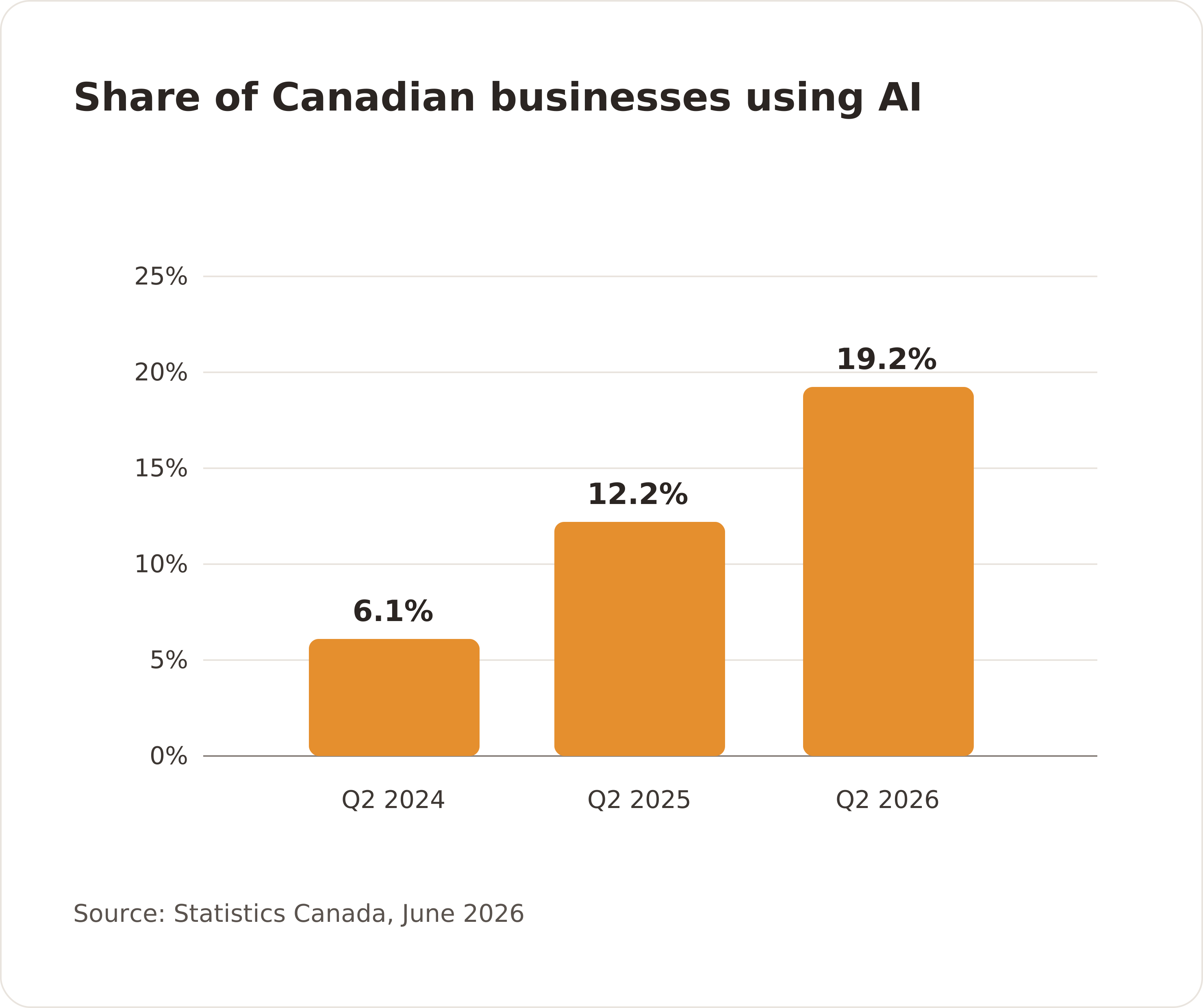
Adoption in Canada has moved quickly and it has not moved evenly. Statistics Canada found that 19.2 percent of businesses used AI to produce goods or deliver services in the twelve months before the second quarter of 2026, three times the share reported two years earlier. Another 40 percent said AI is simply not relevant to what they do.
That second figure is the interesting one. Some of those businesses are right. Plenty of others have looked at a long list of AI products, found nothing that obviously matched their intake process or their quoting cycle, and reasonably concluded there was nothing there for them. The gap is rarely the technology. It is the absence of anyone translating between what the business actually does all day and what these systems are good at.
Cost and privacy sit behind a lot of the hesitation too, and they are fair concerns. Canadian businesses named cybersecurity or privacy worries as their single biggest barrier to adopting AI, ahead of cost. Any engagement that ignores those two questions deserves to stall.
What Our AI Consulting Services Cover
Every engagement is scoped to what the organization needs, but the work tends to fall into six areas. Most clients start with the first two and add the others as the plan takes shape.
AI Readiness and Opportunity Assessment
We map how work actually moves through your business, from first enquiry to invoice, and mark the points where time disappears or information gets rekeyed. You get a ranked list of opportunities with an estimated effort and payback for each, plus an honest note on the ones not worth doing yet.
AI Strategy and Roadmap
A roadmap that names the processes you are changing, in what order, with which tools, under whose ownership, and on what budget. It covers data quality, access controls, and the policy questions your team will raise in week one, so the plan survives contact with your operations.
Marketing and Sales Automation
Lead scoring that reflects how your sales team actually qualifies, follow up that fires without someone remembering to send it, and content production that gives your marketing people a running start instead of a blank page. This is where the work connects most directly to booked meetings and closed deals.
Operations and Workflow Automation
Quoting, scheduling, intake forms, document handling, reporting packs. The repetitive work that nobody enjoys and everybody does. We identify the steps a system can take over safely, build them, and leave a clear line showing where a human still signs off.
Data, Analytics and Forecasting
Most organizations hold more useful data than they use. We get it into a state worth querying, then build the reporting and forecasting that answers the questions your leadership team keeps asking, such as which customers are at risk and which service lines carry the margin.
Team Training and AI Workshops
A facilitated session for your staff or your leadership, built around your own processes rather than generic examples. People leave with working prompts, a short list of approved tools, and a clear sense of what they are allowed to put into a chatbot and what they are not.
Who We Work With
Healthcare Providers
Clinics, practices and provider groups are carrying a patient acquisition problem and a privacy problem at the same time, and the second one constrains the first. Automation gets scoped around what may legitimately be done with patient information, which in practice means the intake, scheduling, recall and follow up layers rather than anything clinical. Any workflow that touches patient data should be reviewed by your own clinical and privacy advisers before it goes live, and we build on that assumption.
B2B Service Companies
Long sales cycles, a small number of large accounts, and a pipeline that lives either in one person's head or in a CRM nobody fully trusts. Work here usually starts with lead qualification and follow up, because that is where a service business quietly loses revenue it had already earned the right to. If the same process runs differently in two offices, we standardize it before automating anything, since automation makes inconsistency permanent.
Manufacturing and Industrial Businesses
Quoting is the bottleneck in a lot of manufacturing businesses. Estimators are senior, expensive and permanently behind, and a quote that takes four days loses to one that takes four hours. That, along with production reporting and the inventory questions nobody can answer quickly, is usually where the early wins sit.
Public Sector, Indigenous and Community Organizations
Organizations accountable to a council, a board, a membership or a funding body carry a reporting burden that ordinary commercial advice tends to overlook. Work here is scoped with the funding agreement in mind, documented so it can be reported on, and paced to fit a governance cycle rather than fight one. Where a professional body or a regulator has views on what may be done with the information you hold, we build inside those limits and expect your own advisers to review the tooling.
How an AI Consulting Engagement Works
Four phases, each ending in something you can read, approve, or hand to a funder. Nothing moves to the next phase until the one before it has been signed off.
Discovery and AI Readiness Assessment
2 to 4 weeksWe interview the people who do the work, not only the people who manage it. That means sitting with whoever handles intake, whoever builds the quotes, and whoever assembles the monthly reporting. Alongside those conversations we review your systems, your data quality, and the way information currently passes between tools.
What you receive
A written readiness assessment covering current state process maps, a data and systems inventory, a ranked opportunity register with estimated effort and expected benefit for each item, and a plain language summary of the risks, including privacy and security considerations.
Strategy and Roadmap
2 to 3 weeksThe opportunity register becomes a sequenced plan. We decide together what gets built first, choosing one visible win and one structural fix, because a programme that only delivers plumbing loses the room. Budget, tooling, ownership, and governance are settled at this stage rather than discovered later.
What you receive
An AI roadmap document with phased initiatives and timelines, a recommended technology stack with costs, a governance and acceptable use policy drafted for your organization, a budget forecast, and defined success measures for each initiative.
Implementation and Enablement
4 to 12 weeks depending on scopeBuild, connect, test, and hand over. We configure the tools, integrate them with your CRM, website, and existing platforms, and run the new workflow in parallel with the old one until it holds up. Training happens while the build is still fresh, with documentation written for the people who will use it rather than for the people who built it.
What you receive
Configured and tested workflows, integrations with your existing systems, written standard operating procedures, recorded training sessions, and a staff workshop covering the tools now in use.
Measurement, Optimization and Reporting
Ongoing, reviewed quarterlyThe first version of any workflow is a hypothesis. We track what it does against the measures agreed in phase two, adjust what underperforms, and retire anything that turns out not to earn its keep. Reporting is written so a board or a funding body can follow it without a translator.
What you receive
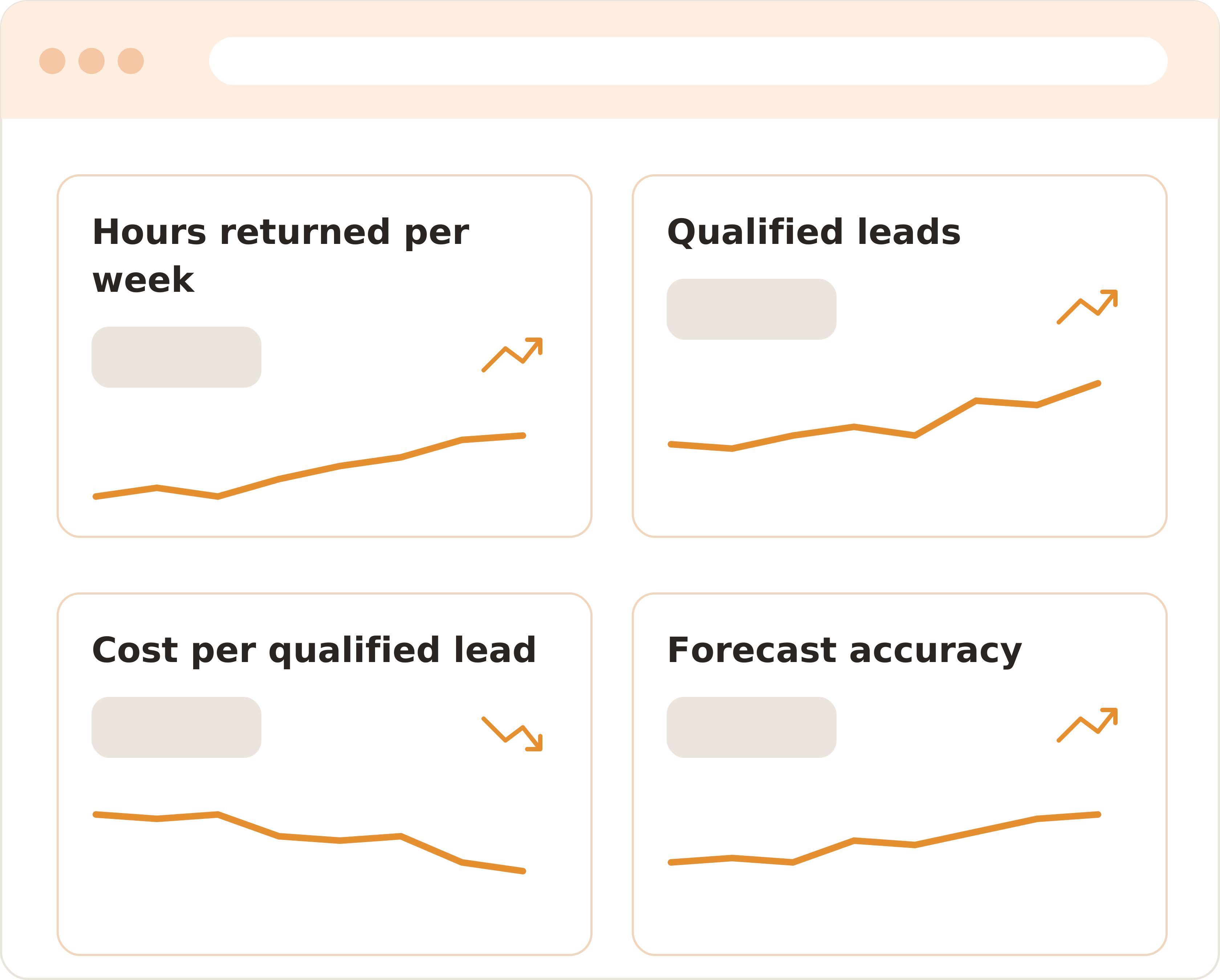
A performance dashboard, monthly or quarterly reporting against the agreed measures, optimization recommendations, and a standing review session with your consultant.
AI Workshops Built Around Your Own Work, Not Generic Examples
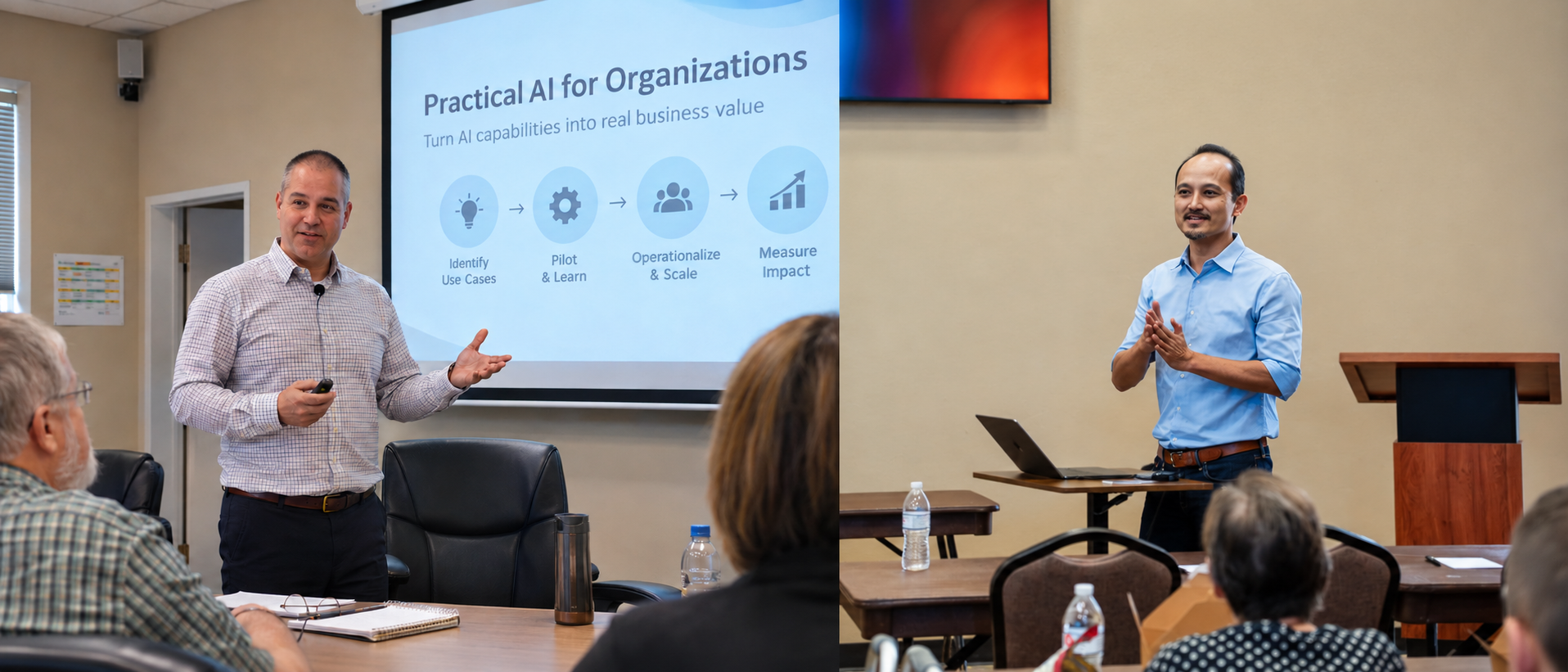
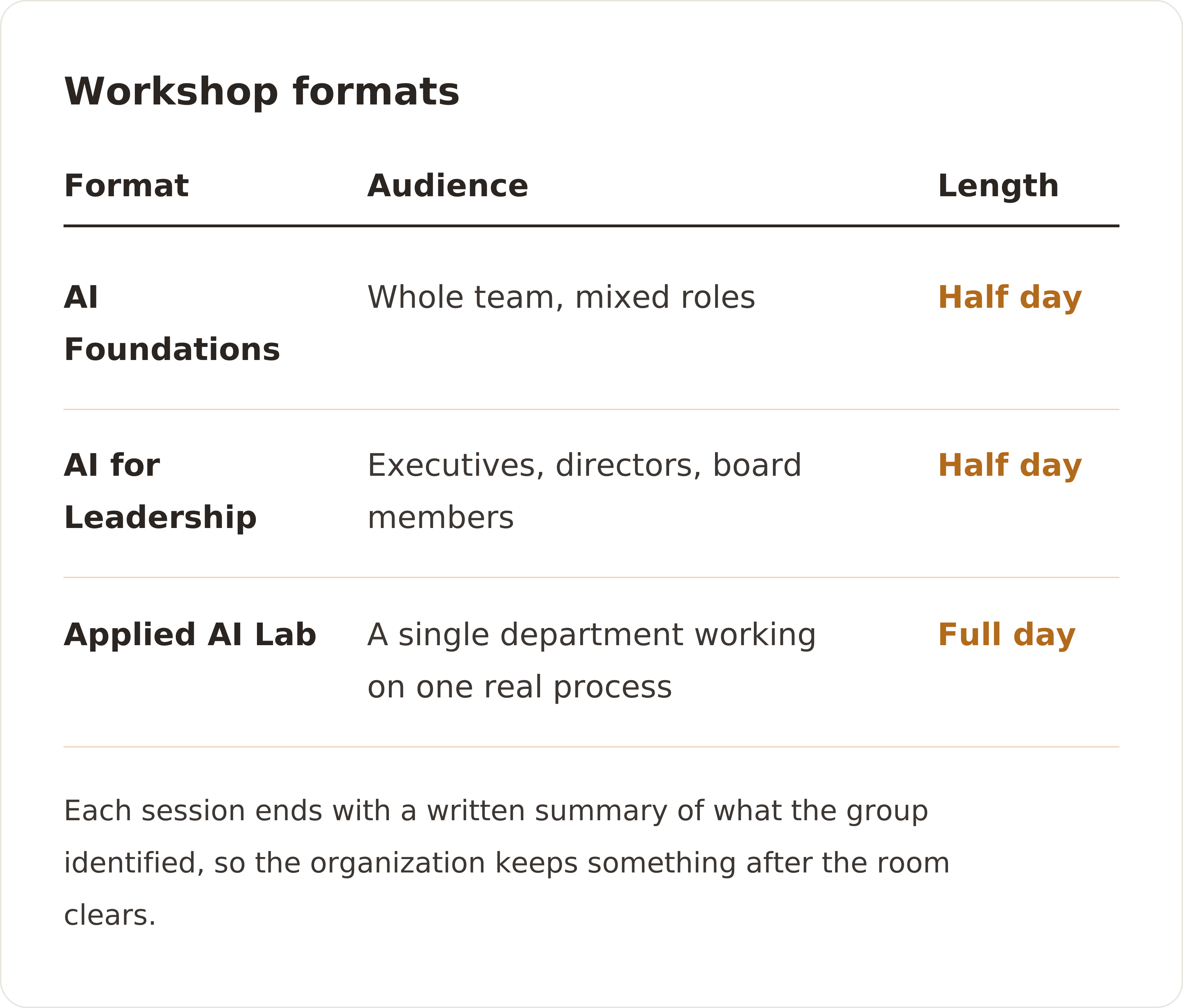
Most AI training shows people a chatbot and hopes something sticks. Ours uses your documents, your intake forms, and your actual reporting templates, so the examples people practise on are the ones they will face on Monday. Sessions run in person at your site or remotely, and they work as a standalone engagement for organizations not ready to commit to a full programme.
They also serve a second purpose. A workshop surfaces, quickly and cheaply, which parts of your operation are ready for automation and which are not. Several clients have used one as the first step before deciding whether to go further.
The People Who Deliver the Work
You will know who is doing the work before you sign anything. AI consulting is a field where a lot of advice arrives from people who have never had to run the process they are redesigning, so it is reasonable to ask who is in the room.

Kai Hulshof
Co-Founder and Chief Executive Officer, Canopy Media. Fractional CMO and Fractional Chief AI Officer.
Kai co-founded Canopy Media in February 2008 and has run it since. Eighteen years of operating a marketing business sits behind the advice he gives about operating one, which matters more than it sounds when the conversation turns to what a process change will actually cost a team in practice. He works with leadership groups on the question underneath every AI project, which is what the organization is trying to change and why. Alongside the CEO role he takes fractional CMO and fractional Chief AI Officer engagements with client organizations, so he carries accountability for the plan rather than handing it over at the end of a slide deck. On Canopy Media engagements he leads discovery, strategy, and the leadership workshops.
Credentials
- Co-Founder and CEO of Canopy Media since February 2008, eighteen years leading the firm
- Completed WSI AI Consulting Certification
- Completed WSI Business Strategy Certification
- Fractional CMO and Fractional Chief AI Officer engagements
- Based in Collingwood Ontario, working with clients across Canada and the United States

Huan Le
Managing Director, Canopy Media. Based in Houston, Texas.
Huan joined Canopy Media as Managing Director in March 2025 and works from Houston. His background is an odd shape for an agency, in a way that turns out to matter on this kind of work. He has been a general counsel, a chief financial officer, a strategy leader and an operator across software, healthcare, marketing and professional services businesses, and he has led several company transactions and exits. That history shows up in the questions he asks early in an engagement. They tend to be about data handling, risk and whether a change will hold up under scrutiny, rather than only whether it saves hours this quarter. On Canopy Media engagements he oversees delivery and governance, and he is the person clients talk to when they want a blunt read on what the numbers are showing.
Credentials
- Managing Director of Canopy Media since March 2025, based in Houston, Texas
- Former general counsel, chief financial officer, strategy leader and operator across software, healthcare, marketing and professional services businesses
- Has led multiple company transactions and exits, and oversees delivery and governance on AI consulting engagements
Kai and Huan lead the engagements. The build behind them is handled by Canopy Media’s own developers, search and generative search strategists, CRM specialists and designers working out of the Toronto, Collingwood and Houston offices, which is the difference between a consultant who recommends a workflow and a firm that can actually stand it up.
Qualified on the Government
of Canada's AI Supplier List
In June 2026, WSI was qualified on the Government of Canada’s list of interested artificial intelligence suppliers, under the Cognitive Automation category. The list is administered by Public Services and Procurement Canada together with the Treasury Board of Canada Secretariat, and it exists so federal departments can procure AI services from suppliers who have already been assessed. WSI is listed as a consulting supplier headquartered in Toronto, qualified in Band 1, which covers engagements valued up to one million dollars before taxes.
Worth being precise about what that means. Qualification is an assessment of capability and of how a supplier governs its AI work. It is not a contract, it does not guarantee future federal work, and it does not transfer any government endorsement to an individual project. What it does tell you is that the delivery standards behind this service have been reviewed by a federal procurement process rather than asserted on a website.
Canopy Media joined the WSI network in 2016 and is a certified WSI Digital Marketing Agency, independently owned and operated, which is how the methodology, training and delivery standards behind this service reach your organization. You get a consultant who knows your market and is close enough to visit, backed by a network that has been doing this work for more than thirty years and has now been assessed through a federal procurement process.
Supplier
WSI
Business type
Consulting
Headquarters
Toronto
Band
1, up to $1M before taxes
“Business owners want the efficiency AI can unlock, but they also want confidence in how it is implemented.”
Valerie Brown-Dufour, President, WSI
How We Measure Whether the Work Paid Off
AI projects are unusually easy to declare successful. Something got built, people were trained, the tool is live. None of that is a result. We agree the measures during phase two and report against the same ones every quarter, including the ones that go the wrong way.
There is a second set of measures that matters if you are building toward a sale, a raise or a succession. A process that only works when one particular person is in the building is a discount on what the business is worth, and the same is true of revenue nobody can explain. Work that documents a process, moves it off one person’s memory and makes the numbers legible is worth something in diligence long before anyone counts the hours it saved. We track those measures when that is where you are headed.
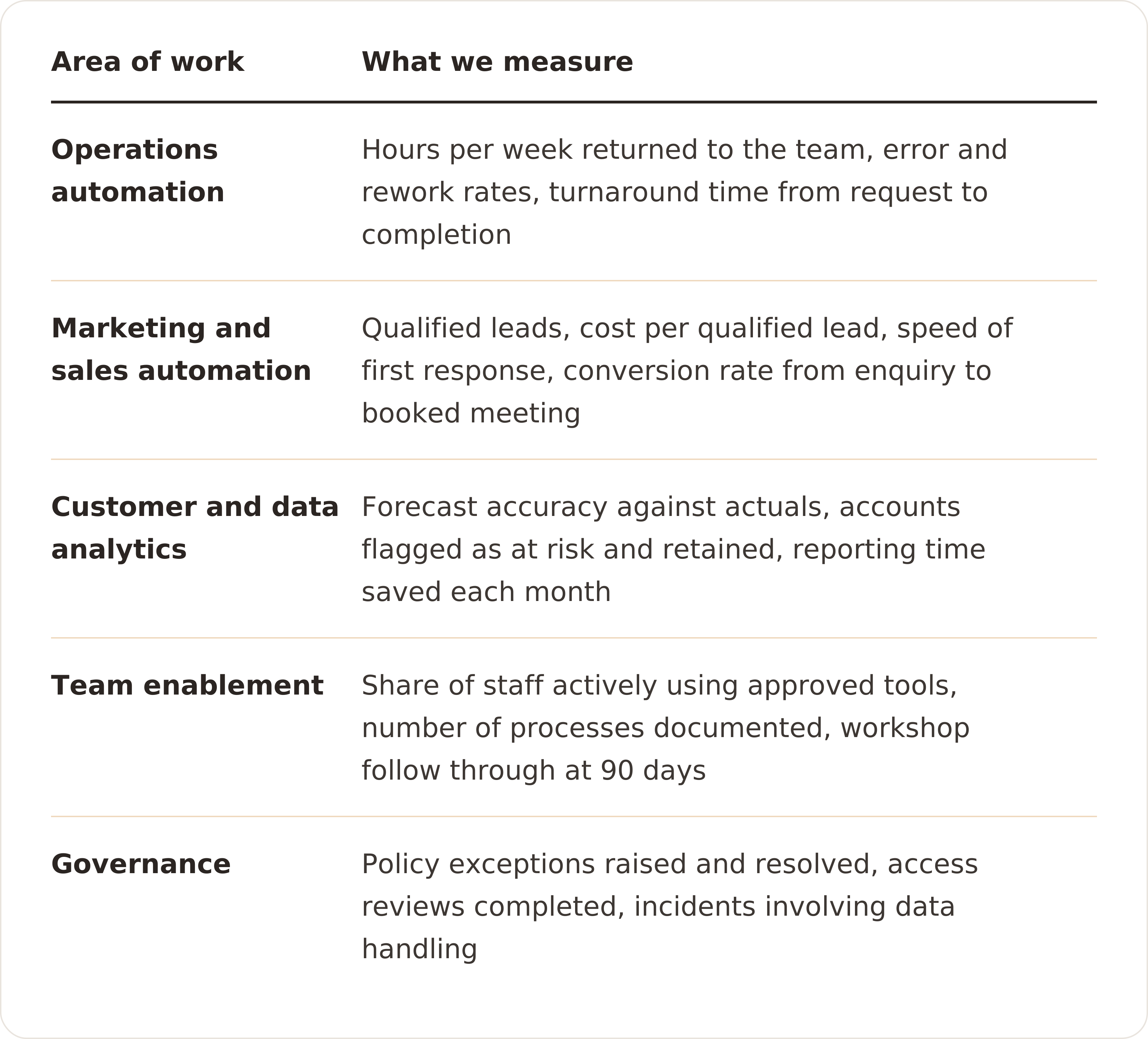
Measures are set against your baseline at the start of the engagement, so the comparison is to your own numbers rather than an industry average.
What to Look for When You Hire an AI Consultant
The field is young and the barrier to calling yourself an AI consultant is a business card. Here is what we would ask if we were the ones buying.
Will they tell you what not to automate?
Anyone who finds an AI opportunity in every process is selling, not advising. A good assessment comes back with a list of things worth doing and a shorter list of things to leave alone, with reasons attached to both.
Do they understand your operations or only the technology?
The hard part of this work is rarely the model. It is knowing which approval step exists for a real reason and which one exists because somebody in 2014 made a mistake. Ask how they plan to learn your process before they recommend changing it.
Who actually does the work after the pitch?
Senior people sell the engagement and junior people deliver it, often enough that it is worth asking directly. Find out who runs discovery, who builds, and who you call in month four.
How do they handle data, privacy and acceptable use?
If nobody has raised where your data goes, which tools staff are permitted to use, and what happens to client information, that conversation is being saved for after the contract. It should happen before.
What happens when something does not work?
Some initiatives underperform. The question is whether your consultant reports that honestly at the quarterly review or quietly changes the measure. Ask for an example of a project they recommended stopping.
AI Consulting Questions We Get Asked
What do AI consulting services actually include?
AI consulting covers the assessment, planning, building, and training that turns a general interest in AI into working processes. At Canopy Media that means reviewing how your business operates, ranking the opportunities by effort and payback, building a roadmap with budgets and ownership attached, implementing the workflows, training your staff, and reporting against measures agreed up front. Some clients take the assessment alone and build internally from there.
How is AI consulting different from IT consulting?
IT consulting generally concerns systems, infrastructure, and support. AI consulting concerns what the business should change and whether a given process is a sensible candidate for automation at all. The two overlap during implementation, since someone has to connect the tools to your existing platforms, and we work alongside internal IT teams or your managed service provider rather than around them.
How long before we see results?
The first phase takes two to four weeks, and the roadmap usually follows within another two or three. Workflow automation built in phase three often shows time savings within the first month of use, since those measures are immediate. Changes that depend on improved data or shifts in how a team works take a quarter or more to read reliably, which is why reporting is quarterly rather than weekly.
Do you work with organizations in both Canada and the United States?
Yes. Canopy Media has offices in Toronto and Collingwood in Ontario and in Houston, Texas, and we work with clients across both countries. Privacy rules, procurement norms, and what customers expect differ between the two markets, so engagements are scoped against the rules that apply where you operate. Cross border organizations get both sets considered.
We are a small team. Is AI consulting worth it for us?
Smaller organizations often see the clearest returns, because one person is usually absorbing several processes at once and the time saved is immediately visible. What decides it is how often the task repeats. If a task happens often, follows a pattern, and eats hours, it is probably worth a look. If your work is genuinely bespoke each time, we will tell you so.
Can you help us write an AI policy for our staff?
Yes, and we recommend it early. A short acceptable use policy covering which tools are approved, what information may be entered into them, and who signs off on new tools prevents most of the problems organizations encounter in the first year. It is included in the phase two deliverables. We draft it for your organization, and your own legal or compliance adviser should review it before you adopt it.
Start With a Conversation About Where AI Fits in Your Business
Thirty minutes, no deck. Tell us how work moves through your organization and where it slows down, and we will tell you which parts are worth automating, which are not, and what a sensible first phase would look like. If the answer is that you are not ready yet, we will say that too.
AI consulting delivered through the WSI network. WSI is qualified on the Government of Canada’s AI supplier list. Offices in Toronto, Collingwood and Houston, serving clients across Canada and the United States.