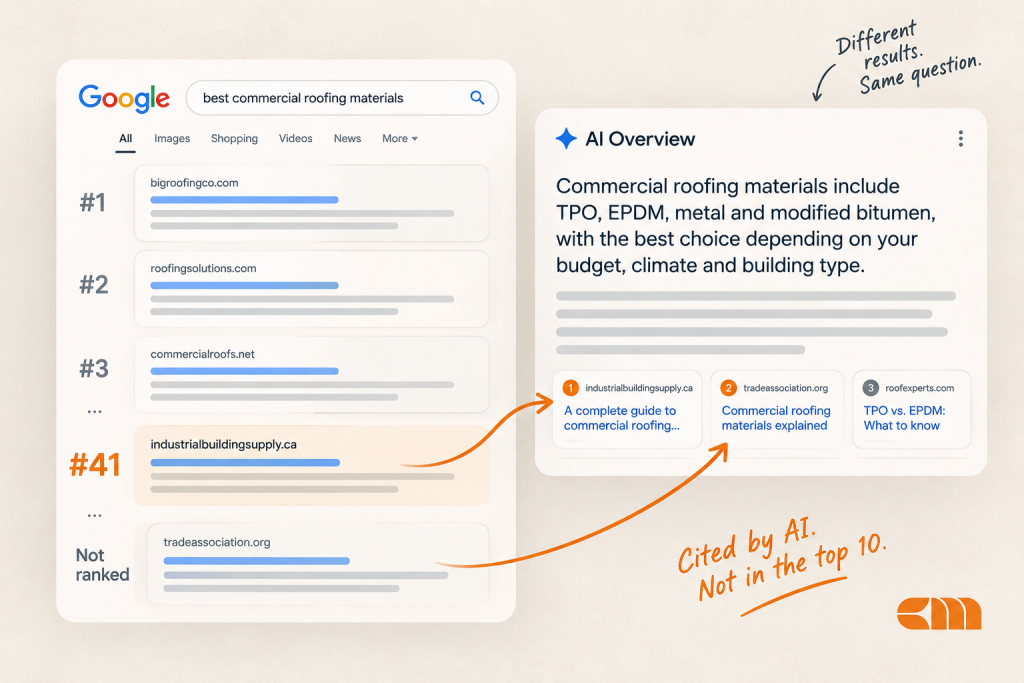
Law firm marketing has been content led for a decade. Write the practice area pages, publish the legal explainers, build the city pages, wait. Some firms do very well out of it. Plenty do not, and the reason is usually structural rather than editorial.
Technical SEO for a law firm is unglamorous work: deciding which pages should exist, making sure Google can read and distinguish them, making the site fast enough on a phone, and making sure you can tell which page produced the call. None of it is exciting. It is also the part that determines whether the content you already paid for has any chance.
Four areas account for most of what we find on law firm sites, and one of them carries professional conduct risk, so it is worth reading to the end before anyone builds ninety city pages.
The practice area times city grid, and the line you should not cross
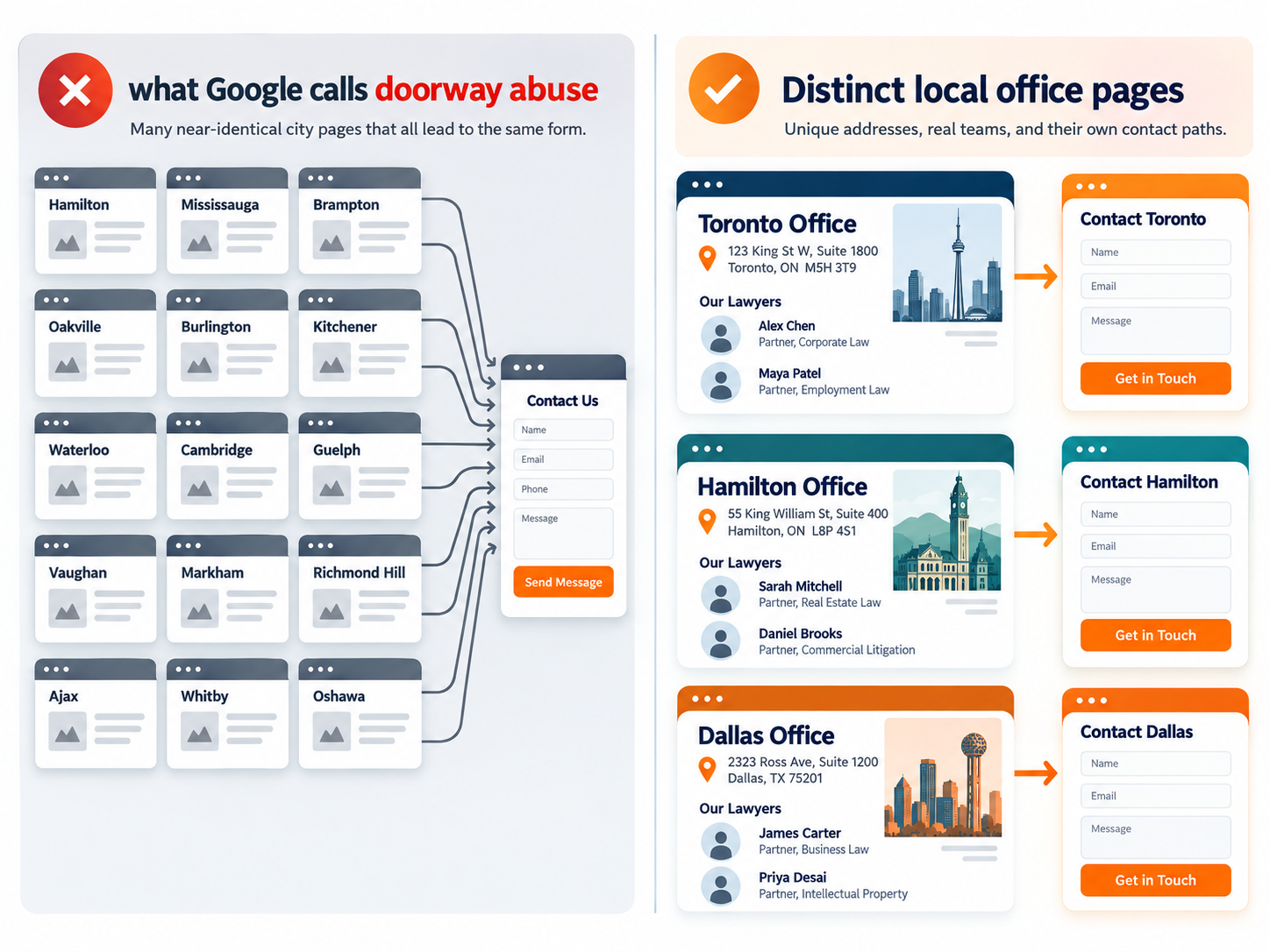
Every firm eventually gets pitched the matrix. Six practice areas across fifteen municipalities, ninety pages, each one “optimized” for personal injury lawyer in wherever. It is the single most common technical SEO recommendation in legal marketing, and Google has an explicit policy against the version most agencies build.
Google’s spam policies name it directly. Doorway abuse includes “having multiple domain names or pages targeted at specific regions or cities that funnel users to one page” (Google Search Central). If your fifteen city pages differ by a place name and a map embed, and all of them push to the same intake form, that is the described behaviour.
This does not mean location pages are off limits. It means each one has to earn its existence. A page for a city where you have an office, with that office’s address, the courthouse you actually appear at, lawyers who practise there, and matters relevant to that jurisdiction, is a real page. A page for a suburb you have never set foot in is not.
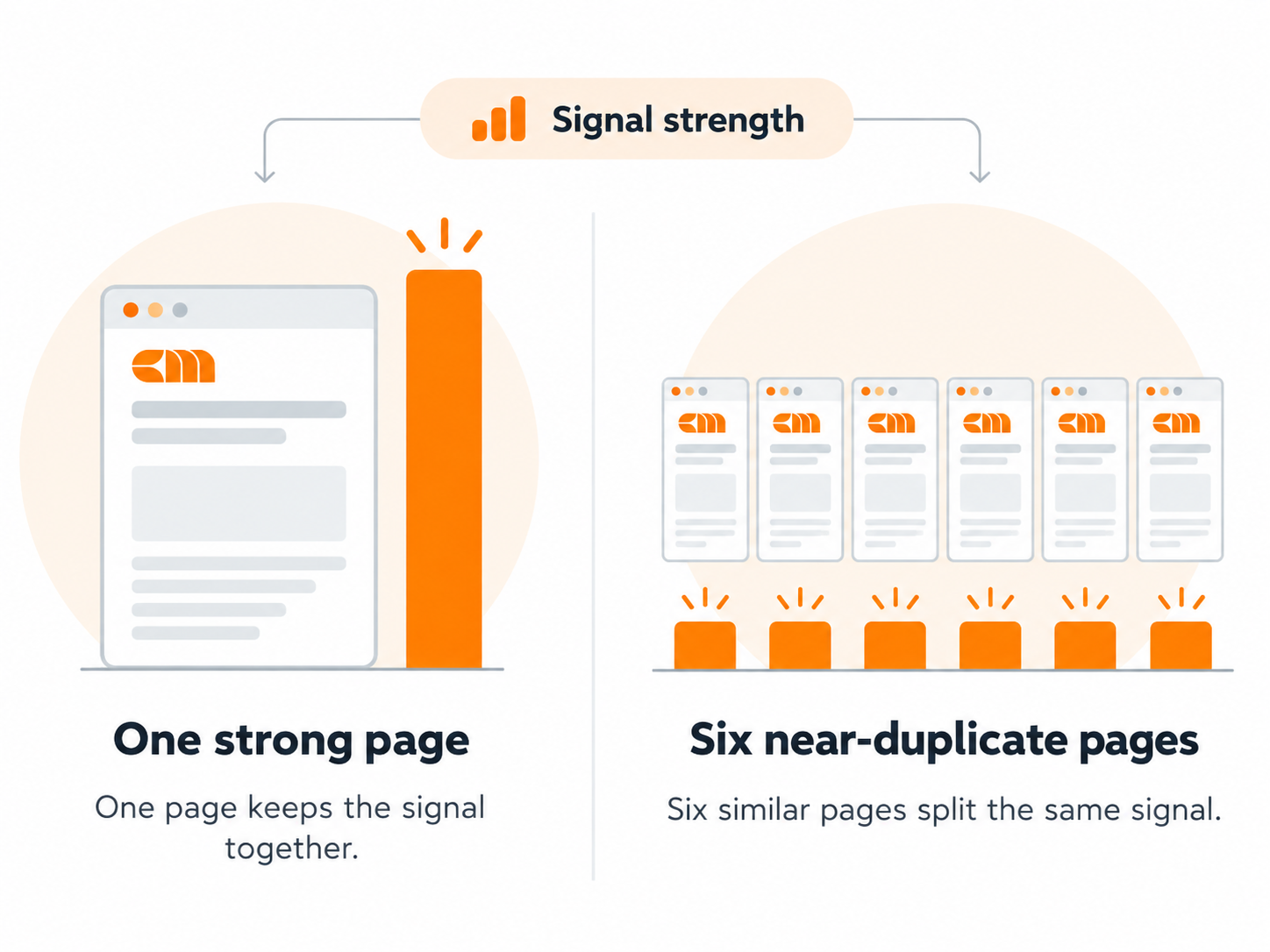 The conservative version that works: build location pages only where you have a physical presence or a genuine jurisdictional distinction, and handle the rest with one strong practice area page that names its service area. Fewer pages, more of them ranking. Cannibalisation is the quieter cost of the matrix approach, where six near identical pages split the signals that should have gone to one.
Markup and entity signals
Legal search is heavily local, and the technical foundations for that are mostly unglamorous data hygiene.
Mark up the firm as an organisation and each office as a LocalBusiness or LegalService, with name and address at minimum. Google is direct that “the more properties you provide, the higher quality the result is to users” (Google Search Central), so hours, phone and geo coordinates are worth including. For firms with distinct practice groups operating separate phone lines, Google’s department property handles that cleanly.
Lawyer bios are underused as a ranking asset. Each lawyer should have their own indexable page with their bar admissions, jurisdictions, education and the matters they handle, marked up as a Person connected to the firm. This is the kind of verifiable credential signal that matters in a category Google treats as high stakes, and it also happens to be the page prospective clients read before they call.
Avoid the temptation to mark up review stars on your own pages. Google’s structured data policies allow self serving reviews only in narrow circumstances, and for a law firm there is a second problem waiting in your professional conduct rules. More on that below.
Speed and intake, which are the same problem
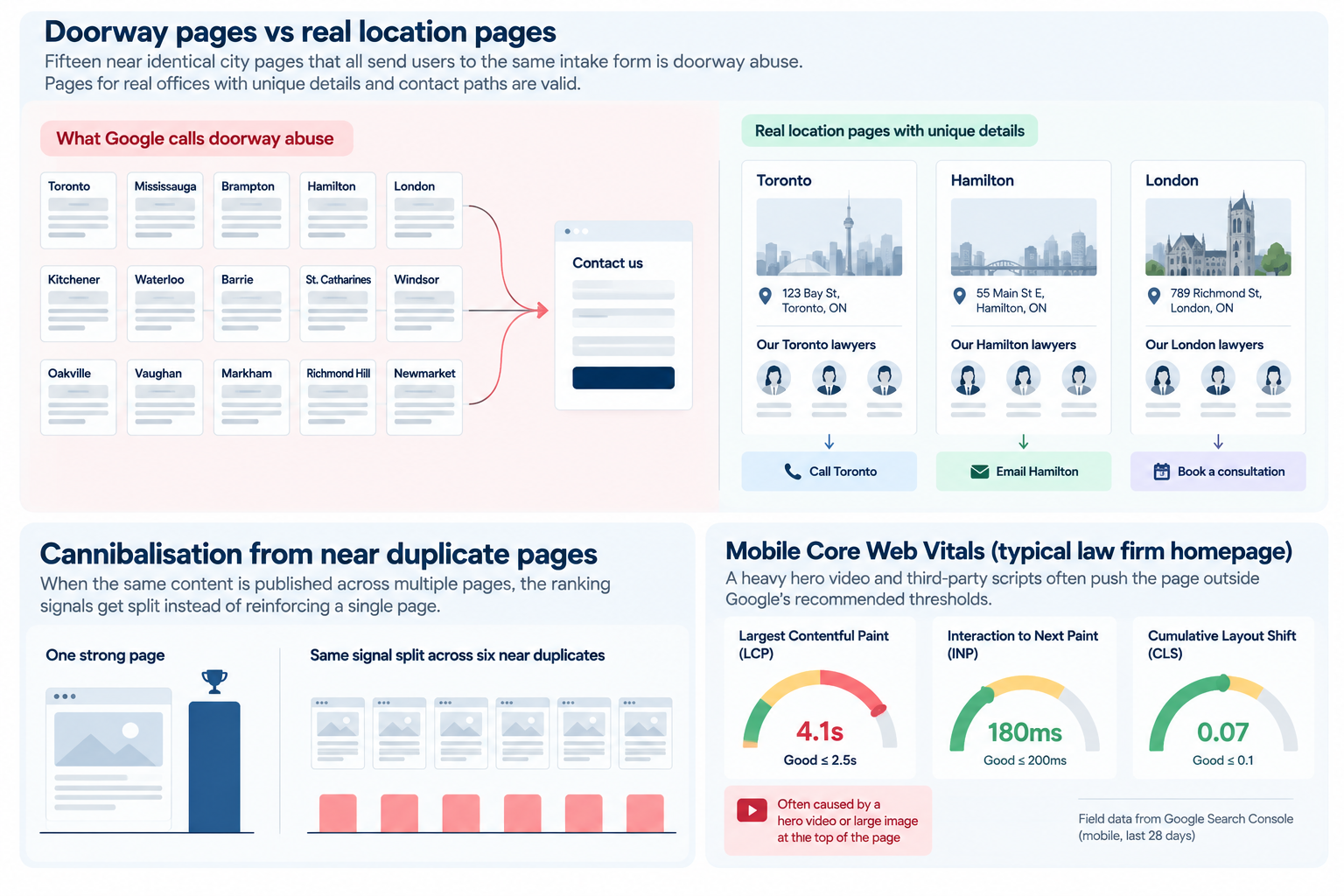
A meaningful share of legal enquiries arrive from someone on a phone in a difficult situation who is not going to wait. Core Web Vitals give you the benchmark: Largest Contentful Paint under 2.5 seconds, Interaction to Next Paint under 200 milliseconds, Cumulative Layout Shift under 0.1, assessed on real visits at the 75th percentile.
Law firm sites fail these predictably, and usually for the same three reasons: a hero video nobody watches, a chat widget loading before the content, and uncompressed headshots. Fixing those is a day of work and it changes the conversion rate on every page, not just the ones that rank.
The measurement side matters more in legal than almost anywhere, because the enquiry is a phone call. Without call tracking tied to landing pages and sources, you cannot tell whether the practice area page or the blog post generated the matter, which means you cannot decide where to spend next. Set up dynamic number insertion, keep your displayed business number consistent in your structured data and Business Profile, and record which page was on screen when the call started.
One caution: call recording carries its own consent requirements that vary by jurisdiction, and legal clients are more exposed than most. Check before you enable it.
The advertising rules shape the technical choices
This is the part generic SEO advice omits, and it is not optional.
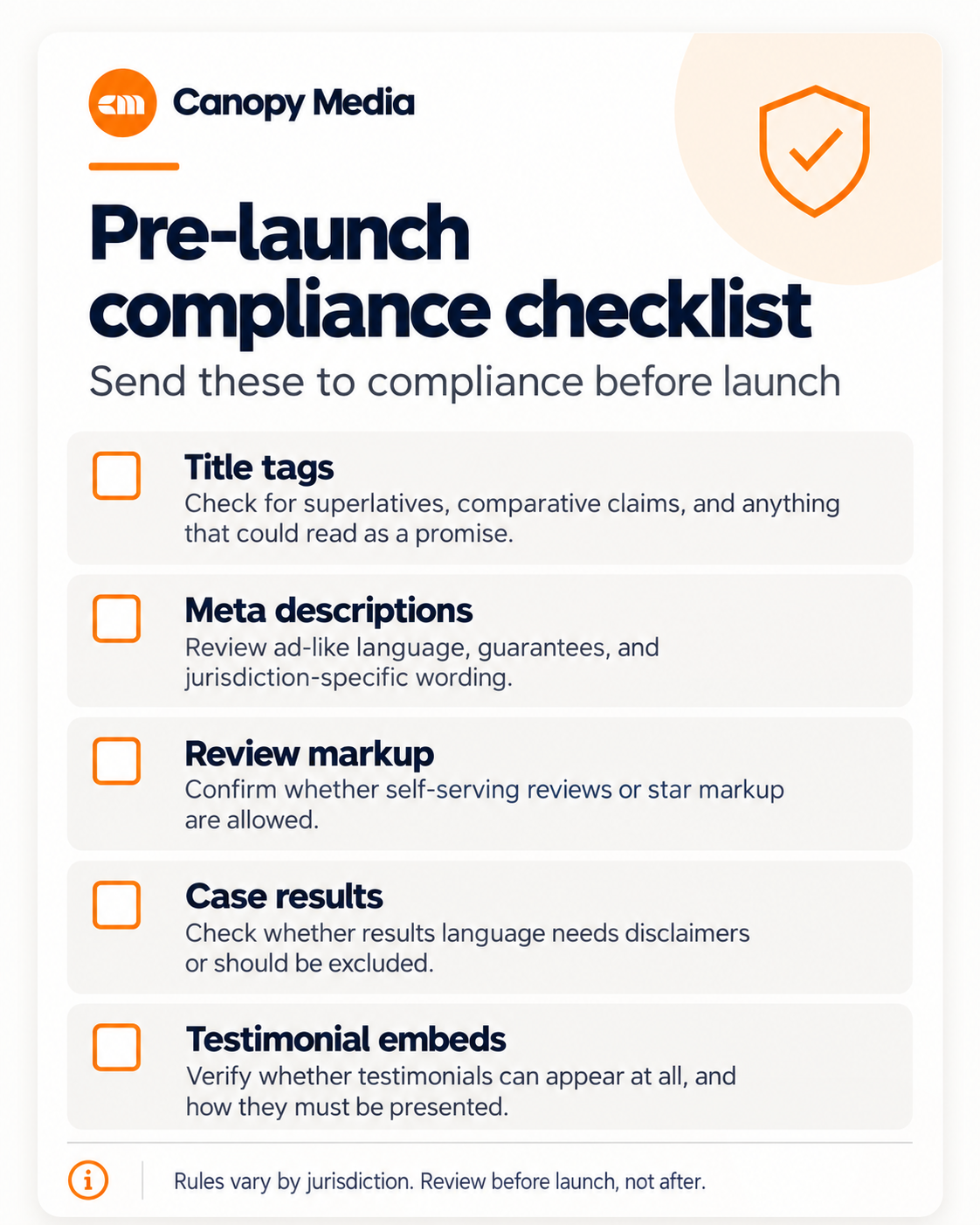
Law society and state bar advertising rules restrict superlatives, comparative claims, and anything that reads as promising an outcome. Title tags are advertising. A title tag reading “Best Personal Injury Lawyer in Hamilton” is a professional conduct question before it is an SEO question, and “we win your case or you pay nothing” in a meta description is worse.
Testimonial and review handling is the other pressure point. Requirements differ by province and by state, and some jurisdictions restrict client testimonials substantially. That has direct technical consequences: whether you can embed a review feed, whether you can mark up ratings, whether case results can appear in structured data at all.
The practical approach is to have your compliance lead review the title tags, meta descriptions and any review or results markup before launch, not after. It takes an hour. Rewriting ninety pages after a complaint takes considerably longer.
We are not your regulator and this is not legal advice. Check your own jurisdiction’s marketing rules, because they vary more than people expect.
Where to start
In order: fix speed on mobile, because it pays back immediately and needs no strategy meeting. Get call and form tracking working, because every decision after this depends on it. Audit the practice area and location pages for overlap and consolidate ruthlessly. Then markup and bios. Content last, once you know which pages deserve the investment.
On timelines, be sceptical of anyone who gives you a number without seeing the site. Speed and tracking changes show up in conversion within a month. Consolidation usually causes a dip for four to six weeks before it pays, and competitive practice areas in major markets can take six to nine months before positions move meaningfully. That is the honest range.
If you would like someone to look at your site and tell you which of these apply, we do technical audits for law firms across USA and Canada, and we will say so if the answer is that your site is fine and the problem is somewhere else. Book a 30 minute strategy session with our experts today!