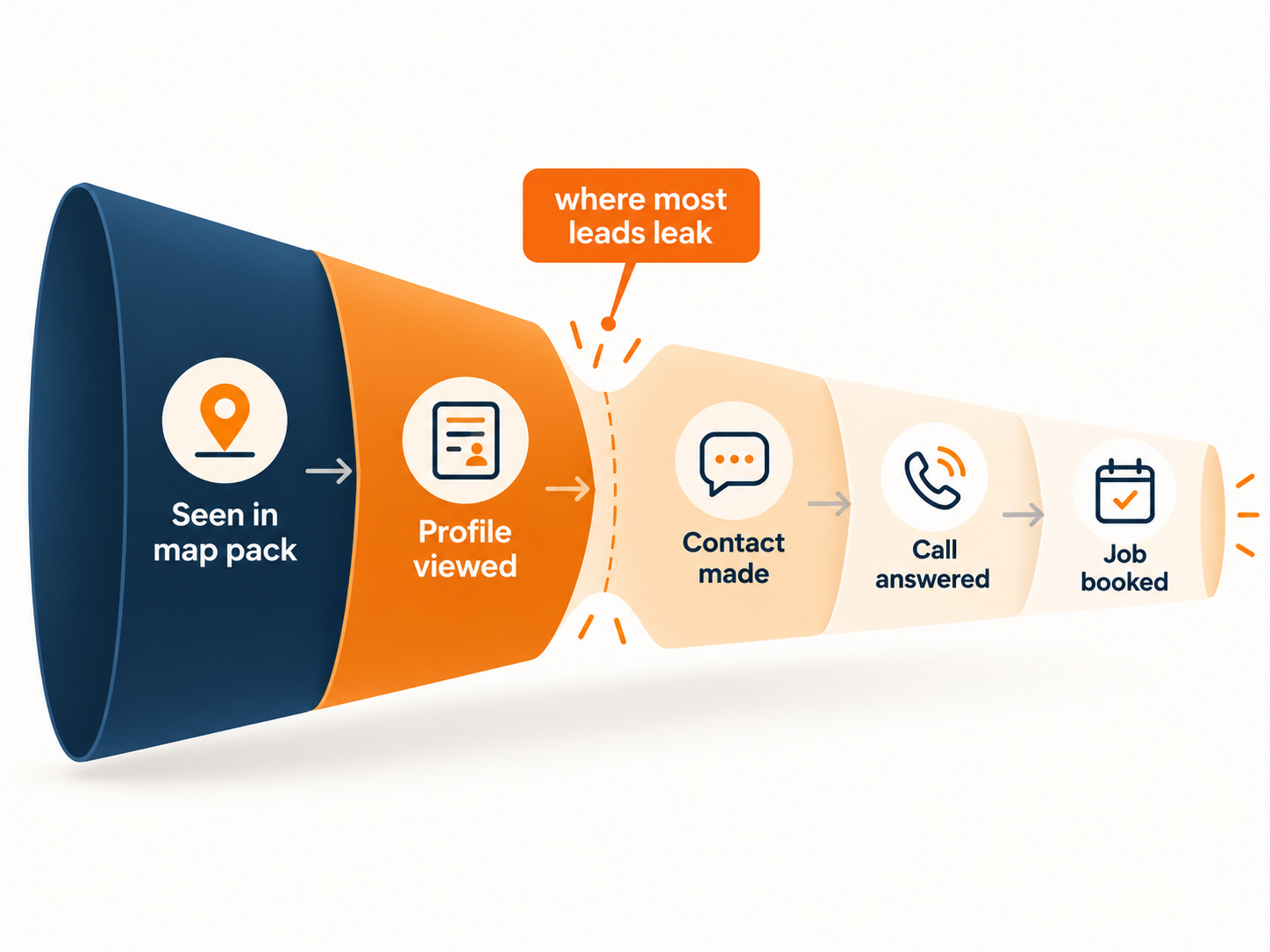
 Ranking in the map pack and getting leads out of it are two different projects, and most local SEO work only does the first one.
We see it regularly. A contractor sits in the top three for their main service in their city, their traffic chart looks healthy, and the phone rings about as often as it did last year. The visibility is real. The conversion from visibility to enquiry is where the money is leaking, and almost nobody is measuring that part.
This piece is about the second half: what turns local search visibility into booked work, and which of it is worth your time first.
Where local leads come from now
Google is straightforward about what drives local ranking. Three factors: relevance, “how well a Business Profile matches what someone is searching for”; distance, “how far each business is from the customer who’s searching”; and prominence, “how well-known a business is,” which Google says includes “how many websites link to your business and how many reviews you have” (Google Business Profile Help).
Distance is the one you cannot change, and it explains more frustration than anything else in local SEO. If you are twenty minutes outside the city centre, you are not going to outrank a competitor two blocks from the searcher for a proximity weighted query, however good your site is. Accept it and compete where you can win, which is relevance and prominence.
The other change worth knowing about: the discovery path has broadened. BrightLocal’s 2026 Local Consumer Review Survey of 1,002 US consumers found 71% use Google to find local businesses, but 45% now also use AI tools like ChatGPT, up from 6% the previous year. That is a single survey and a fast moving number, so treat it as direction rather than gospel. The practical implication is the same either way: accurate, consistent, well structured business information matters more when several systems are reading it, not fewer.
The changes that move enquiries rather than rankings
Most local SEO checklists stop at the profile being complete. Complete is the floor. The things that change enquiry volume are narrower than that.
Services, listed individually and specifically. “Plumbing” is a category. “Emergency drain clearing,” “sump pump replacement” and “backflow prevention testing” are what people search, and each one wants its own service entry and ideally its own page on your site.
Photos, added continuously rather than once. A profile with current photos of actual work reads as an operating business. One with the same four stock images from 2021 reads as abandoned, and people choose accordingly.
A service area that matches reality. Setting a 90 kilometre radius does not make you rank 90 kilometres away. It dilutes your relevance signal and attracts enquiries you will decline.
On the website side, the highest leverage change is usually the simplest. Put a tappable phone number in the header on mobile. Cut the contact form to name, phone and a one line description of the problem. Every extra field costs you enquiries, and the qualifying questions you want answered can be asked on the call.
One genuine local signal worth building: pages about work you have actually done in specific places. Not a city page template. A short write up of the job, where it was, what the problem turned out to be, with photos. These rank, they demonstrate you work in that area, and they are the only kind of location content that does not sail close to Google’s doorway page policies.
Reviews and response speed, which is the part people skip
This is where the survey data gets uncomfortable, and where most of the lost leads actually are.
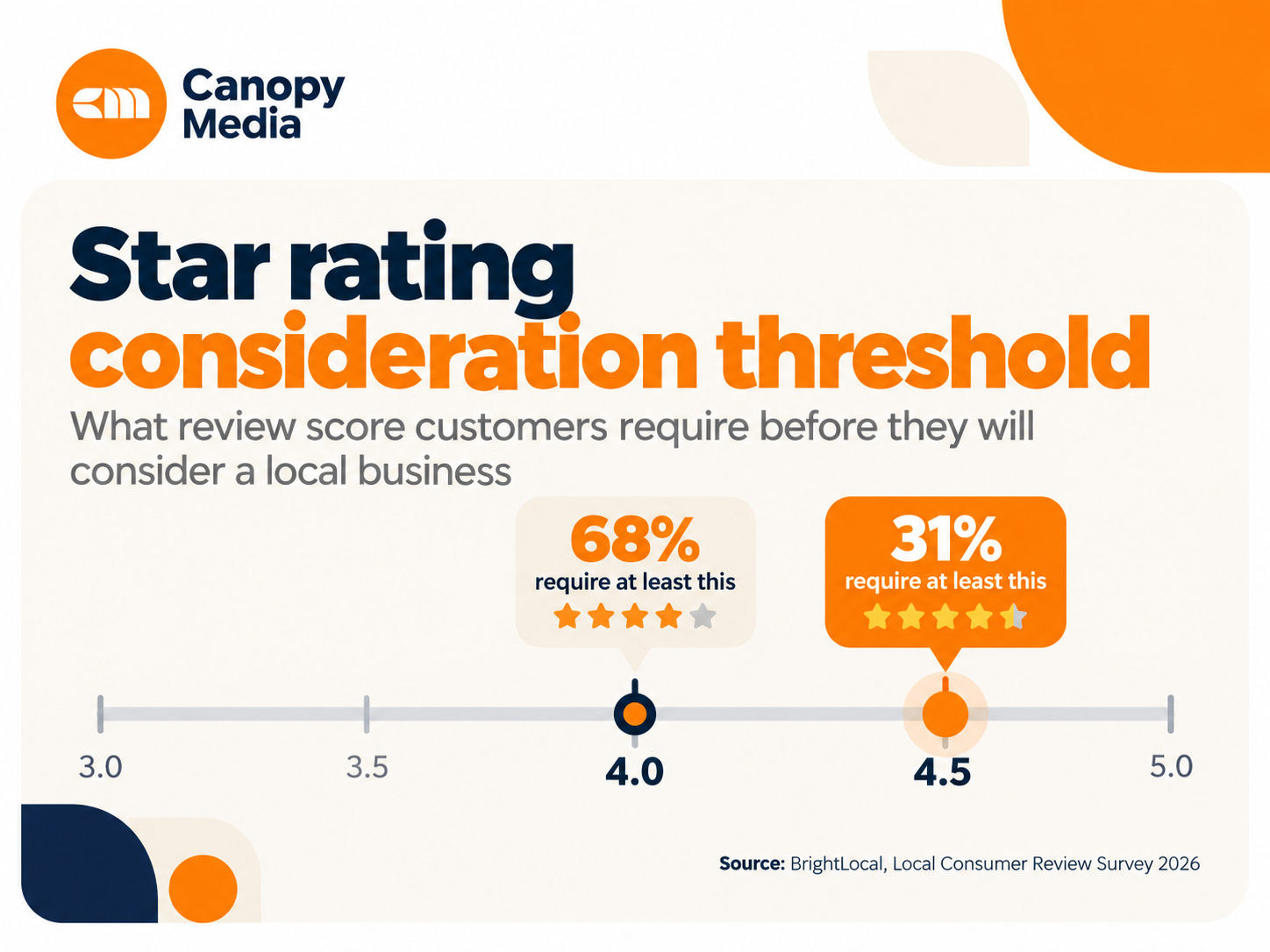
BrightLocal’s 2026 survey found 97% of consumers read reviews for local businesses. 68% require at least four stars before they will consider a business, and 31% will only use businesses at 4.5 or above, up from 17% a year earlier. 74% want reviews written within the last three months, and 44% weight the last month most heavily.
Read that again with your own profile in mind. A 4.2 average, with the most recent review from February, puts you outside the consideration set of roughly two thirds of the people who see you, no matter what position you rank in. You can spend a year of budget on rankings and never touch that.
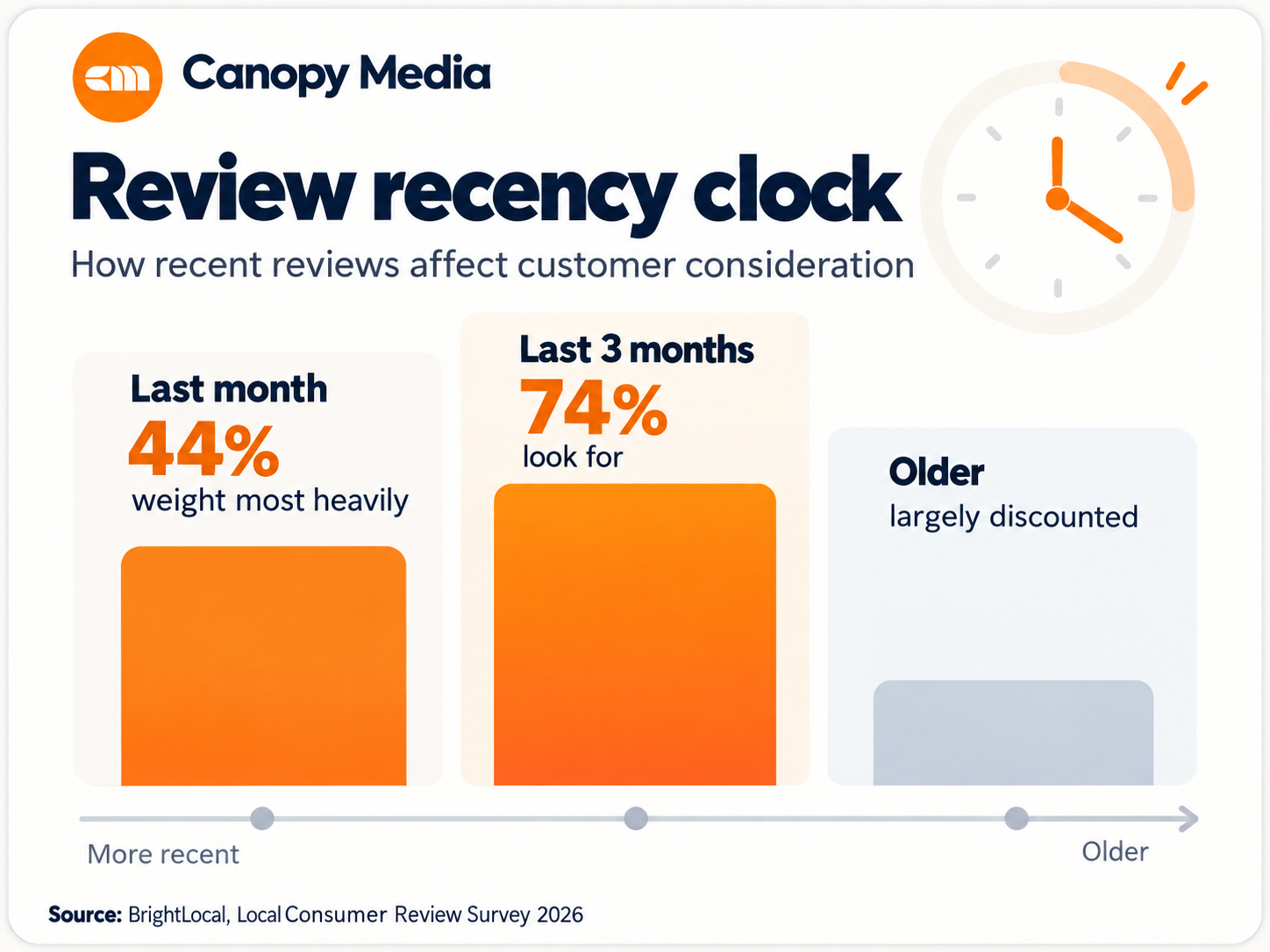
So reviews are not a nice to have running alongside local SEO. They are the conversion mechanism. A steady trickle, asked for at the moment the job is finished, beats a burst of forty after a campaign, because recency is doing the work.
Responses matter too and are cheap. 80% of respondents said they favour businesses that reply to all reviews, and 50% reacted negatively to generic or templated responses. Half your audience can tell when you have pasted the same thank you thirty times. Write two real sentences instead.
The speed expectation has shifted sharply as well: 19% now expect a response within a day, against 6% the year before. Whatever you think about that, it is the same instinct driving enquiry behaviour. People contact three businesses and hire whoever calls back first.
Knowing which activity produced which lead
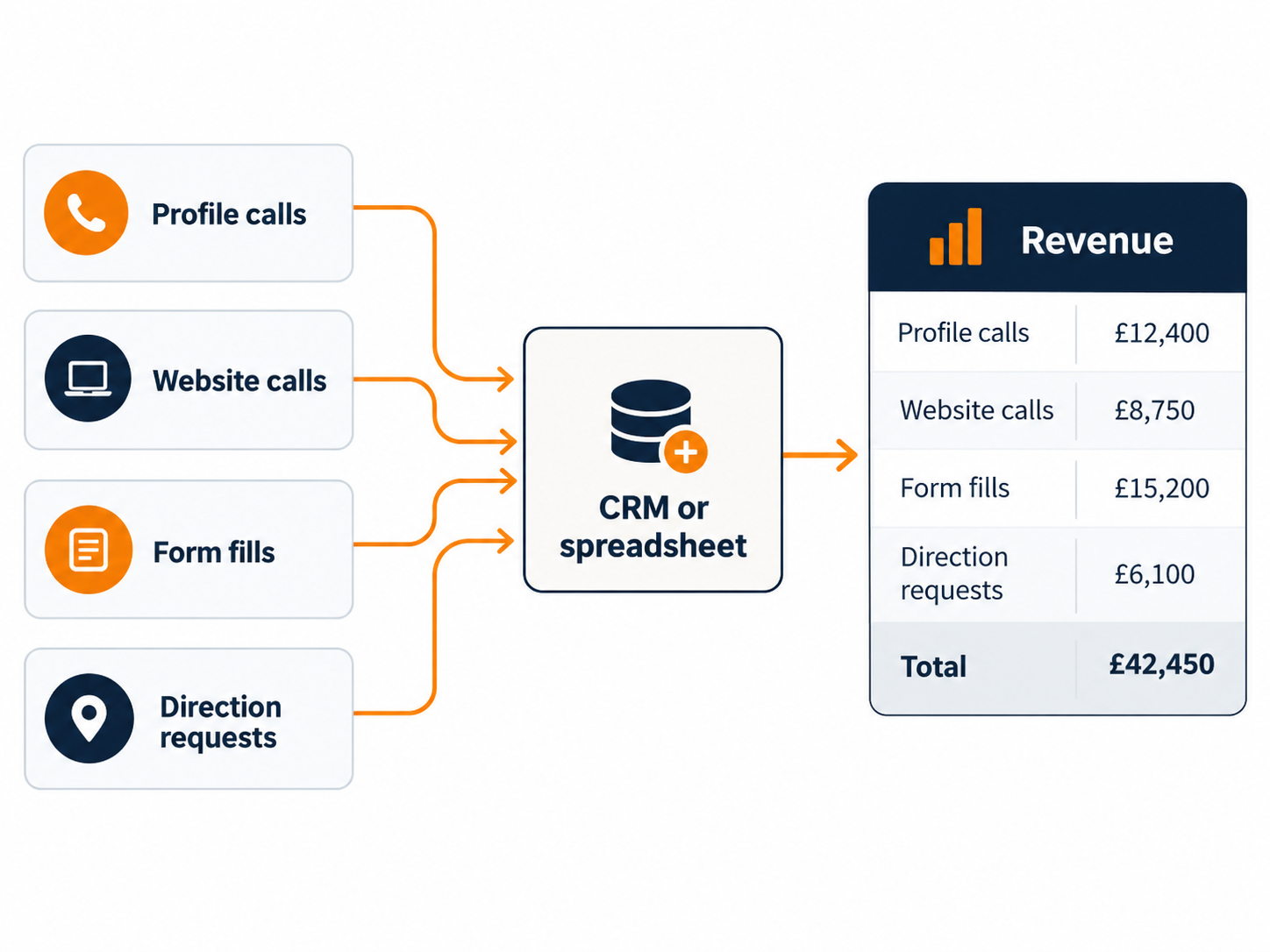
You cannot improve what you cannot attribute, and local lead tracking is broken at most businesses we meet.
The minimum setup: a tracked phone number on the website that is distinct from the one on your Business Profile, so profile calls and website calls are separable. Form submissions passed into your CRM with the landing page and source attached. Google Business Profile’s own call and direction request data reviewed monthly. And someone recording, even in a spreadsheet, which enquiries turned into paid work.
That last one is the whole point and the one nobody does. Thirty leads at $200 each from one channel and eight leads at $4,000 each from another are not comparable, and a report showing lead volume alone will push you toward the wrong one. Track revenue per source or accept that your marketing decisions are guesses.
Do not replace the phone number on your Business Profile with a tracking number, by the way. Keep the real number there and consistent with your website and your citations.
What to do first
If you have thirty days and limited attention, in this order: get the review flow running, because the star rating gates everything downstream. Fix the mobile contact path. Set up call tracking so the next decision has data behind it. Then go after rankings.
That sequence is deliberately backwards from how most local SEO engagements are sold, and it is the order that produces leads soonest. Ranking improvements typically take three to six months in a competitive local market. The review and conversion work changes your numbers within weeks, and it makes the ranking work worth more when it lands.
A word of honesty about scope. If you are a single location business in a large metro competing against franchises with hundreds of reviews, local SEO alone may not get you there, and a small paid search budget alongside it is usually the faster route to a full schedule. Any agency that will not tell you that is selling you a retainer.
If you want a look at where your own leads are leaking, we audit local search and lead flow together for service businesses in Canada and USA, and the answer is sometimes that your rankings are fine and your intake is the problem. Contact us today!