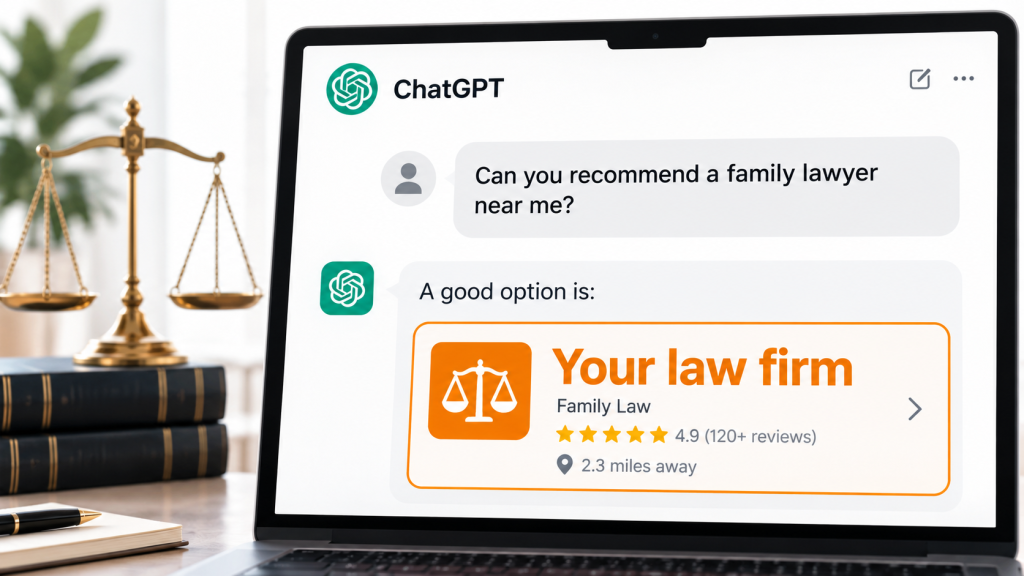
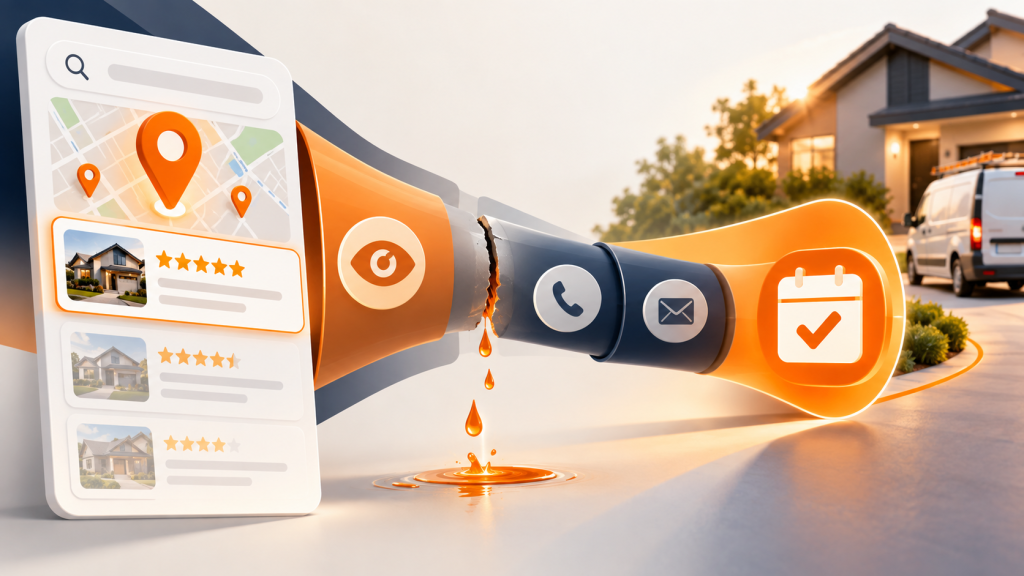
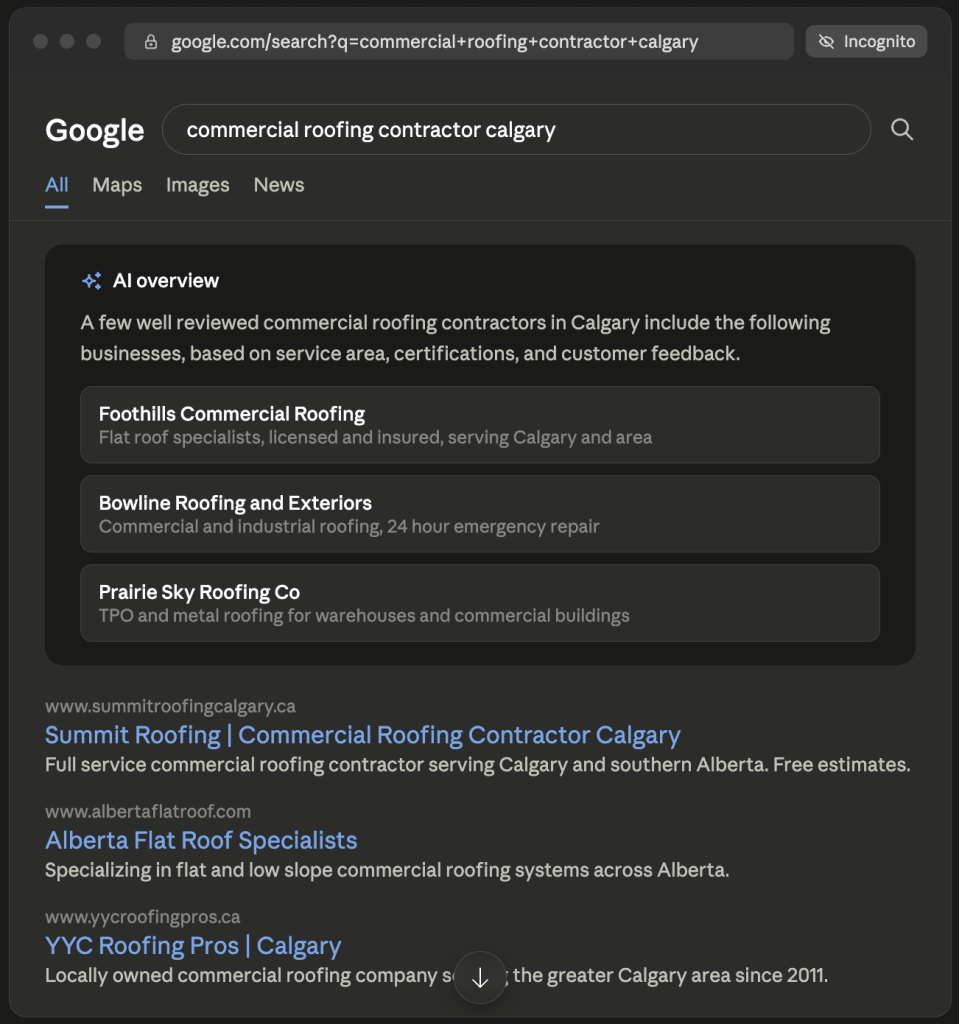
Here’s a fun exercise. Open a private browser window, pretend you’re not you, and search for your own business the way an actual buyer would. Not your company name. The real thing they’d type: “commercial roofing contractor Calgary,” “concrete supplier near me,” “structural steel fabricator Texas.”
Now brace yourself, because you might not like what you find.
Most companies in construction and building like to believe work gets won at the bid table, on the phone, or through relationships built over twenty years of showing up and doing good work. That’s still true, mostly. But by the time a buyer actually calls, emails, or files an RFQ, a surprising amount of the decision has already quietly happened without you in the room. They looked you up first. Everybody does.
Doesn’t matter if it’s a homeowner cross-referencing three roofers, a GC assembling a sub list at 11pm the night before a bid closes, or a procurement team working through a spreadsheet of building product manufacturers. The channel changes. The instinct doesn’t. People check what’s publicly visible before they ever pick up the phone, and if a company doesn’t show up clearly in that quiet research phase, it doesn’t get crossed off the list so much as it never makes it onto the list at all. Not because the work was bad. Because nobody ever saw it happen.
And here’s the part that makes this worth an actual email instead of a shrug: it’s getting more true, not less. Google’s AI-generated answers are increasingly happy to just name two or three companies directly at the top of the page, take it or leave it, instead of handing someone ten blue links to sort through themselves. Getting named in that summary, or showing up clearly when a person does the legwork manually, now carries as much weight as the quality of the work in determining who even gets a shot.
So, back to that search you just ran. Did you show up? If there was an AI-written summary up top, were you in it, or did it name your competitor down the road instead? If it’s the competitor, that’s not bad luck. It’s rarely random. Somewhere, that company has a Google Business Profile that’s actually filled out, or a case study with real numbers in it, or a certification listed where a specifier can actually find it. Small, boring things. They add up.
Why this quiet research phase got so powerful
For most of construction’s history, reputation traveled slowly, through job sites, trade associations, and word of mouth over a beer after a long week. That still matters, and it always will. But it used to be the only real filter. Now it’s one of two, and the second one runs entirely online, often before anyone on your team even knows a project exists.
The shift toward AI-generated search answers just sped up something that was already happening. Buyers were already Googling contractors before calling them. They were already reading reviews and skimming websites before an RFQ went out. What’s changed is how much gets decided in that moment, and how compressed the field of choice becomes. When an AI summary confidently names three companies instead of listing thirty links, being one of the three matters enormously, and being invisible in that moment is a much bigger cost than it used to be.
If you’re homeowner-facing

The research almost entirely runs through your Google Business Profile, your reviews, and your project photos. A profile that’s current and specific beats one that’s been quietly rotting since 2023, unclaimed categories, outdated hours, a profile photo of a logo from two rebrands ago. Reviews matter well past the star count, too. “Great service, five stars” tells nobody anything. A review that mentions what actually got fixed, how long it took, and what surprised the customer tells a future one, and increasingly an AI system skimming that same review, a lot more. If you’re only ever asking customers to rate you, try asking what they’d tell a neighbour about the job instead. Small tweak, much better material, and it costs nothing but a slightly better question at the end of a job.
If you’re commercial, developer-facing, or building products
Swap reviews for due diligence. Procurement teams and specifiers go looking for capability pages with real project scale, licensing and certifications that are easy to find and actually current, and case studies with specifics instead of vague adjectives like “innovative” or “trusted.” Nobody has ever been won over by the word innovative. Consistency counts too, more than most companies realize. If your company sounds like three slightly different businesses depending on whether someone’s reading your website, an industry directory, or a mention on someone else’s site, that’s a confusing signal to send to a human buyer, let alone an AI system trying to figure out what category to put you in and who else belongs there with you.
Nobody needs to be everywhere
You don’t need a presence on every platform under the sun, and chasing all of them is a good way to do all of them badly. You need to know the two or three things a real buyer in your category actually checks, and make sure those specific things are accurate, current, and say something true about the work. That’s a smaller job than it sounds like. Most companies in this industry have simply never sat down and looked at themselves from the buyer’s side of the table, mostly because for a long time, they didn’t have to.
They do now. Which is either a mildly annoying new item on the list, or a genuinely easy way to start showing up where competitors currently don’t, depending on how you want to look at it.